Engineering policy first
Our AI-Native Product Engineer codifies architecture, security, and domain rules upfront and enforce them across every change.
We help you build, validate and monetize product and feature ideas x20 times cheaper and hundreds times faster with AI-native software development services
Without structured specifications, engineering policy, and automated validation, agents generate output faster than teams can verify it. The result is more review overhead, more rework, and limited impact on actual release velocity.
AI-native development is purpose-built for products where speed and correctness matter equally.

AI-first development accelerates complex architectures with bounded contexts, explicit service contracts, and verifiable integration boundaries — from modular monoliths to event-driven microservices.
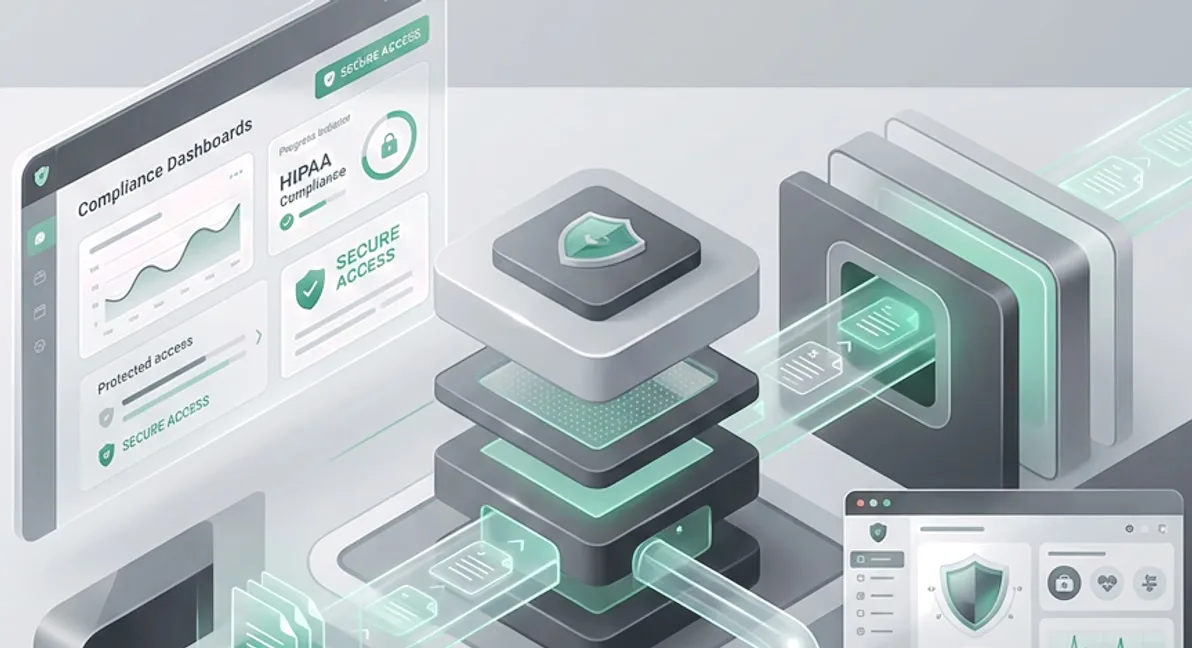
Develop healthcare and compliance-heavy platforms with PHI protection, consent boundaries, role-based access, secure logging, and HIPAA-aligned patterns built into the system from the start.

Build trading, payments, lending, insurance, and wealth products with domain validators for Decimal precision, idempotency, audit trails, reconciliation, and regulatory patterns from day one.
Go from a validated idea to a deployed product in days. We build structured MVPs and PoCs with clean architecture, testable logic, and a clear path to production.
Build the internal tools, dashboards, workflows, and data platforms that usually get deprioritized. With AI-first economics, custom development becomes faster, leaner, and easier to justify.
When implemented right, AI-first development workflows unlock up to 100x development productivity — zero manual coding, 100% automated testing, security review, and compliance verification built in from day one.

We've built the methodology, the tooling, the team of experienced AI-Native Product Engineers, and the operational discipline to run AI agents as a full development life cycle.
Machine-orchestrated workflows replace role-to-role transitions and reduce loss or distortion of functional requirements and business logic.
Implementation, testing, refactoring, documentation, and remediation run continuously and concurrently.
Development costs per result reduce significantly in comparison with human-centered development. The price per result is fixed upfront based on the requirements.
Itexus runs AI-native software delivery through an AI-Native Product Engineer who governs specialized agents across the full lifecycle.
Architecture, security, and domain rules are codified upfront and enforced on every change.
Code quality, tests, contracts, and merge conditions are checked continuously through automated gates.
Every change is evaluated against technical and domain-specific requirements throughout delivery.
Requirements, decisions, validation results, and code changes remain logged, reviewable, and auditable.
Itexus delivers maintainable codebases with version history, automated tests, deployment configuration, and documentation.
Once the execution layer is in place, additional delivery depends far less on incremental headcount.
We use a controlled, auditable delivery process to convert approved requirements into production-ready software. Each change passes stage-specific validation and remains fully traceable from initial requirement to deployed release.
Our AI-Native Product Engineer codifies architecture, security, and domain rules upfront and enforce them across every change.
Architecture, patterns, aggregate design, and test strategy are produced and validated through automated gates before implementation starts.
The output is a maintainable codebase with version history, automated tests, deployment configuration, and documentation — fully owned by your team.


Requirements are defined as executable engineering briefs with scope, constraints, non-functional requirements, and acceptance criteria.
Every change is checked for security risks, domain-specific violations, compliance issues, and test quality. Critical failures block delivery.
Our AI-Native Product Engineer codifies architecture, security, and domain rules upfront and enforce them across every change.
Requirements are defined as executable engineering briefs with scope, constraints, non-functional requirements, and acceptance criteria.
Architecture, patterns, aggregate design, and test strategy are produced and validated through automated gates before implementation starts.
Every change is checked for security risks, domain-specific violations, compliance issues, and test quality. Critical failures block delivery.
The output is a maintainable codebase with version history, automated tests, deployment configuration, and documentation — fully owned by your team.
We sell the results secured by the methodology and experienced AI-Native Product Engineers.
Let’s DiscussA banking organization operating in a high-security environment and processing customer documents flows across multiple service scenarios. The solution had ...
Our AI-native delivery stack is built for controlled execution. This keeps customer data, models, and delivery artifacts contained, traceable, and protected.

API endpoints use bearer tokens, UI access uses secure session cookies, and the system fails fast when required secrets are missing.
Sensitive LLM outputs are excluded from logs by default, and temporary processing files are automatically deleted after execution.

Only the application port is exposed; model servers run in a private container network with offline, read-only model access.

Uploads are PDF-only, filenames are sanitized, file sizes are limited, SQL queries are parameterized, and rendering is XSS-safe.

Authenticated endpoints, concurrency limits, health checks, readiness checks, and recovery logic keep execution stable and controlled.
Credentials are injected through environment variables, containers use minimal runtime images, and log rotation reduces attack surface.










Most AI delivery failures are not model failures. They are system failures.
What happens when you stop treating AI as an autocomplete tool and start treating it as an engineering partner — and what your team needs to get there.
Tell us about your product, legacy platform, integration challenge, or AI initiative. We’ll respond within 24 hours and sign an NDA if needed.
Define scope, risks, integrations, compliance requirements, architecture, and delivery priorities with fintech analysts and software architects.
Get structured requirements, architecture documentation, UI/UX direction, technical guardrails, and a feature-by-feature estimate.
Get the first production-ready version of your product within weeks with our AI-first development approach for greenfield projects — ready for further extension and enterprise scalability.
Answer content to be added from the itexus.com FAQ source.
Answer content to be added from the itexus.com FAQ source.
Answer content to be added from the itexus.com FAQ source.
Answer content to be added from the itexus.com FAQ source.
Answer content to be added from the itexus.com FAQ source.
Answer content to be added from the itexus.com FAQ source.
Answer content to be added from the itexus.com FAQ source.
Answer content to be added from the itexus.com FAQ source.
Answer content to be added from the itexus.com FAQ source.
