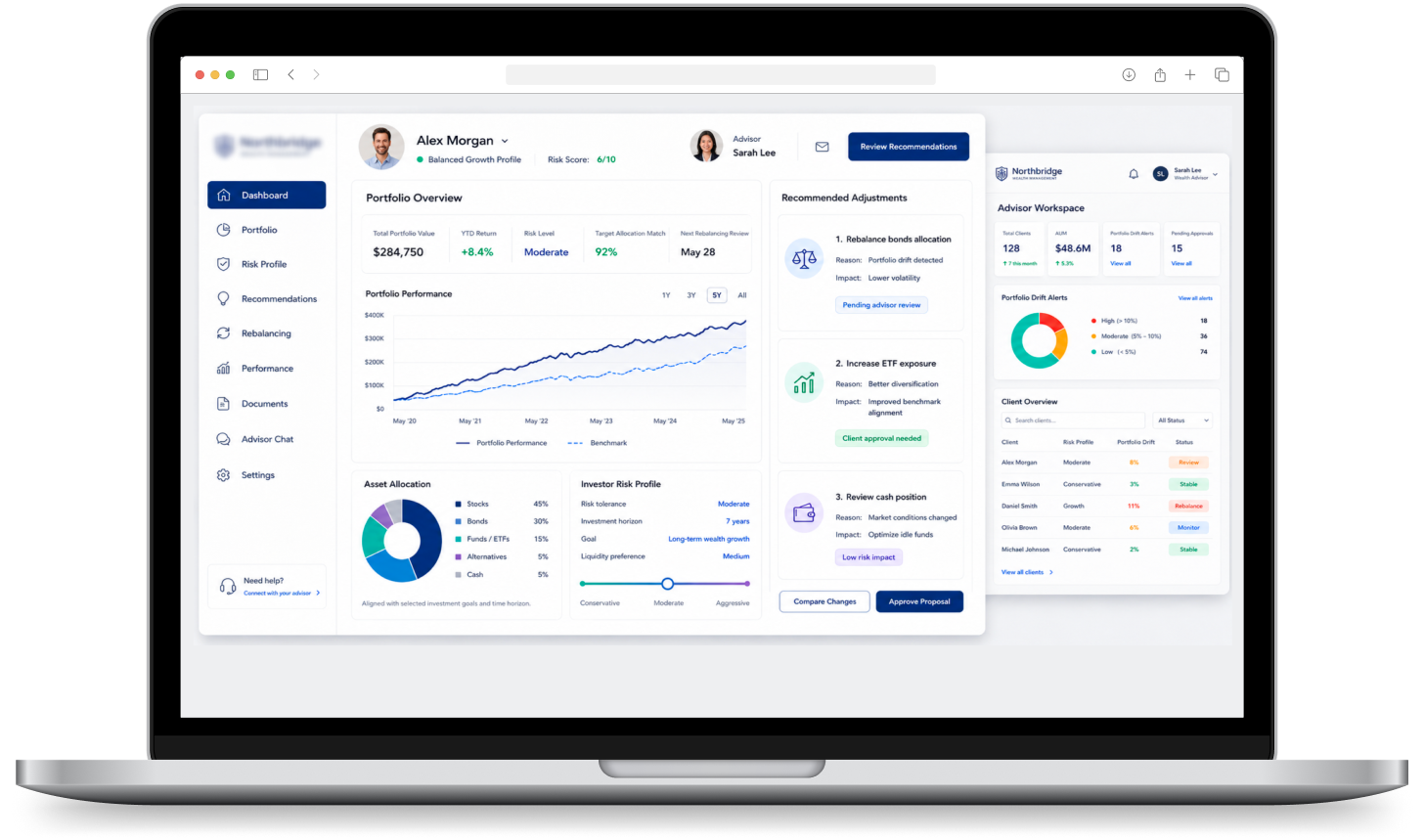
For upstream operators, the best ERP is usually a specialist oil and gas accounting system: Quorum Upstream On Demand and IFS BOLO for mid-size and large operators, Enertia for teams that want field data and financials in one database, and PakEnergy for smaller operators and service companies. Majors, international joint ventures and groups already on SAP should look at SAP S/4HANA, and in our view oilfield service companies are often better served by a general ERP such as IFS Cloud or NetSuite.
Oil and gas accounting breaks general ERPs in specific places. An operator pays the bills on a well, then splits them among working interest partners through joint interest billing (JIB). It sells the oil and gas, then splits the revenue among working, royalty and overriding royalty owners using division orders and revenue decks that change with every title opinion and acquisition. Add authorizations for expenditure (AFEs), leases, severance taxes and production allocations, and a ledger with project codes is no longer enough. Service companies have a different problem: field tickets, rentals and crew time that must become invoices the operator will approve.
This guide is published by Itexus. We don't sell ERP licenses or resell any vendor. We integrate ERPs with the rest of a company's systems, and we say where that matters below.
Quick Picks: Best ERP for Oil and Gas by Situation
As of November 2026, none of the eight publishes a list price for its oil and gas offering.
| Best for | ERP | Why | Starting price |
| Mid-size and large operators leaving legacy systems | Quorum Upstream On Demand | Cloud suite for accounting, land, well and production operations | Not published (subscription) |
| Operators wanting a dedicated upstream accounting package | IFS BOLO | JIB, revenue and allocations, cloud or on premises | Not published (by quote) |
| Field data and financials in one system | Enertia | Integrated upstream ERP, field to financials | Not published (subscription) |
| Upstream plus midstream assets | W Energy Stream+ | Plant and pipeline accounting next to upstream accounting | Not published (by quote) |
| Small operators, service companies, first purchasers | PakEnergy | Separate accounting products for each side of the business | Not published (by quote) |
| Majors and international joint ventures | SAP S/4HANA | Joint venture accounting inside SAP | Not published (by quote) |
| Oilfield services with equipment and rentals | IFS Cloud | ERP, asset management, field service and rentals in one platform | Not published (by quote) |
| Multi-entity service and energy groups | NetSuite | General cloud ERP with an oil and gas offering | Not published (annual license) |
Which ERP Fits Your Oil and Gas Business?
Three questions settle most shortlists: are you an operator, a midstream company or a service company; how many wells, owners and entities do you carry; and do you need one system or a specialist next to a corporate ERP?
| If you… | Start with | Because |
| Operate hundreds to thousands of wells in several entities | Quorum Upstream On Demand | Built for operators leaving legacy systems, with native land and production links |
| Have an experienced accounting team | IFS BOLO | IFS says it scales from a few wells to a few thousand |
| Want production, AFEs and accounting in one system | Enertia | Sold as one system "from the field to the financials" |
| Own gathering, plants or pipelines as well as wells | W Energy Stream+ | Plant and pipeline accounting are part of the platform |
| Have a small office, or sell services or buy crude | PakEnergy | Products for operators, midstream, first purchasers and service companies |
| Run SAP across the group or operate international JVs | SAP S/4HANA | SAP documents joint venture cash calls and partner netting |
| Run a service fleet with rentals and maintenance | IFS Cloud | Rental, field service and asset management in one platform |
| Like your accounting system but re-key tickets, check stubs or SCADA data | Keep it, fix the integrations | By our estimate, automating those feeds costs a fraction of a migration |
If you sit between two rows, or outside all of them, have an Itexus engineer review your situation before vendors start pitching.
What Oil and Gas Companies Actually Need From an ERP
Every vendor page says "built for energy". Make each system prove these eight points in the demo.
- JIB that matches your JOAs. Cost allocation by working interest, overhead, cash calls, partner netting and clean statements. Bring a real joint operating agreement to the demo.
- Revenue distribution and division orders. Decks that separate working from net revenue interest, owner deductions, suspense, escheat and 1099s. Ask how a mid-month ownership change is handled.
- AFE control. Budgets, partner approvals and actuals tied to each AFE, with alerts before overruns.
- Land and lease records. Leases, obligations and owners that feed revenue decks without a second entry.
- Production accounting. Daily volumes, monthly allocations to wells and owners, and severance tax by state.
- Integrations with the systems around the books. SCADA and field data capture, invoice and field ticket networks such as OpenInvoice, purchaser check stubs, banks for owner payments and positive pay, reserves tools, GIS, and a parent company's ERP. Get the vendor to say which of these links exist today, which need a connector and which are custom work.
- Service-company billing, if that is your side. Field tickets, rental rates, crew time and job costing.
- Room for acquisitions. New entities, wells and thousands of owners loaded in weeks, without rebuilding the chart of accounts.
What matters less than vendors suggest: AI assistants, executive dashboards and claims about total wells under management. Closing JIB and revenue on time every month, with an audit trail, matters more.
The Shortlist in Depth
Eight systems in two groups: specialists that put JIB, revenue and land at the core (Quorum, IFS BOLO, Enertia, W Energy, PakEnergy), and general ERPs with oil and gas functions or add-ons (SAP S/4HANA, IFS Cloud, NetSuite). They are ordered by fit for a North American upstream or midstream operator, not alphabetically; service companies should read the last three closely. The feature claims come from each vendor's own pages and documents.

1. Quorum Upstream On Demand
Upstream On Demand is Quorum Software's cloud suite for upstream operators: accounting, land, well operations and production operations.
Who it fits: mid-size and large operators with several entities and basins, replacing an older on-premises system. Larger portfolios can also choose My Quorum Accounting.
Strengths: according to Quorum, On Demand Accounting includes the general ledger, AP and AR, JIB under joint venture terms, revenue and burden decks, owner distributions, severance tax inputs and check printing, with AFE budgets tied to actuals through Execute AFE. Quorum says more than 500 companies use On Demand products, and more than 200 use My Quorum.
Limits: it is upstream only; Quorum sells midstream accounting separately as eONE. My Quorum runs in a dedicated Q Cloud rather than multi-tenant SaaS, so the two products differ. Quorum gives no implementation timeline.
Integration notes: Quorum documents native links between its accounting, land, production and well apps, plus REST APIs for third-party systems and a corporate GL. Its pages don't mention OpenInvoice or bank links, so invoice networks, positive pay files and check stub imports should be tested in the demo or planned as integration work.
Pricing (as of November 2026): not published; Quorum describes a subscription model.

2. IFS BOLO
IFS BOLO is upstream accounting software from IFS Energy & Resources, formerly P2 Energy Solutions, which IFS acquired in 2022.
Who it fits: operators with an experienced accounting team, from dozens to thousands of wells. IFS also sells IFS Excalibur, which it aims at US E&P companies, and IFS Qbyte.
Strengths: according to IFS, BOLO covers revenue accounting, allocation and valuation, AP and AR, JIB and division of interest. IFS says it runs in the cloud or on premises, scales from a few wells to a few thousand, and quotes three to six months to be fully functional.
Limits: IFS sells production data capture and allocation separately, as IFS Merrick, so a full stack means several licenses. Product names changed after the acquisition, so check which product each reference customer runs.
Integration notes: IFS markets an AI-based AP invoice module for BOLO, Excalibur and Qbyte, and IFS Merrick for production, which IFS says manages over 500,000 wells. Links to non-IFS land or production tools, OpenInvoice and a corporate ERP should be scoped in the quote.
Pricing (as of November 2026): not published; by quote.

3. Enertia
Enertia Software sells an integrated upstream ERP that, according to its site, has covered operators "from the field to the financials" for 40 years. It has offices in Dallas, Houston, Midland, Southlake and Tulsa.
Who it fits: independent E&P operators, from small companies to what Enertia calls super independents, that want production, land and accounting in one system.
Strengths: according to Enertia, it covers JIB, revenue distribution to partners and royalty owners, and automated severance tax calculations and filings, plus daily estimates, monthly volume allocations, AFE management, morning reports, and land, contract and mapping tools.
Limits: one integrated vendor system suits companies starting fresh, less so those with land or production tools they want to keep. Ask for deployment and implementation time in writing; the site is light on both.
Integration notes: Enertia's FAQ says it syncs with SAP, Oracle, SCADA, field data capture and land tools, and runs on Microsoft SQL Server. Ask which partner tools it connects to for owner statements and royalty payments.
Pricing (as of November 2026): not published. Enertia's FAQ describes a monthly or annual subscription that includes cloud hosting, with add-on modules and custom integrations extra.
4. W Energy Stream+
W Energy Software, based in Houston, sells Stream+, a platform it announced in 2025 for upstream and midstream accounting and operations.
Who it fits: companies running wells as well as gathering systems, gas plants or pipelines that want one vendor for both.
Strengths: according to W Energy, Stream+ covers revenue accounting, AP, joint venture accounting with division orders, land, production, mobile field data, field service and AFE management. For midstream it lists plant accounting, pipeline accounting and right-of-way land.
Limits: Stream+ is new as a combined platform, so ask how existing customers migrate. W Energy doesn't publish implementation timelines or name the ERPs it connects to.
Integration notes: W Energy says Stream+ is the source of truth for operational and accounting data and passes validated financial data to a corporate ERP, with HighWire feeding midstream measurement data. Ask whether the ERP link is an API, a file export or a connector; that decides what you build.
Pricing (as of November 2026): not published; by quote.

5. PakEnergy
PakEnergy, based in Abilene, Texas, sells SaaS accounting and operations software across the oil and gas value chain.
Who it fits: small and mid-size operators, non-operators, midstream companies and first purchasers, and service companies, including water disposal and trucking.
Strengths: according to PakEnergy, its upstream accounting handles JIB with unlimited division orders per property, revenue distribution with owner-level corrections, AFE prepayments, MICR check printing, 1099s and escheat for all 50 states. Its service company product rolls several field tickets into one invoice and feeds time to payroll. PakEnergy says it has more than 2,300 customers.
Limits: land, SCADA, wellsite data and trucking are separate products, so price the exact set you need. PakEnergy doesn't describe severance tax reporting.
Integration notes: PakEnergy lists document imaging, bank reconciliation, positive pay and an Exchange product for division orders and e-signatures. Service companies billing through OpenInvoice should ask how tickets reach it; Enverus says OpenInvoice integrates with more than 30 ERP and field ticketing platforms.
Pricing (as of November 2026): not published; PakEnergy asks for a demo.
6. SAP S/4HANA
SAP S/4HANA is SAP's enterprise ERP; for oil and gas, SAP documents Joint Venture Accounting (JVA) for operated and non-operated ventures.
Who it fits: majors, national oil companies and large independents with international joint ventures, or groups already on SAP.
Strengths: according to SAP's documentation, JVA handles cash calls that an operator sends to partners and that a non-operating partner receives, and runs partner netting. SAP also sells a cloud product called SAP S/4HANA Cloud, oil and gas upstream contracts management.
Limits: SAP's own pages don't spell out how production and revenue accounting fit with JVA in current releases, so ask your SAP partner which oil and gas components your scope needs. Projects are long and partner-led, and for a few hundred wells they rarely pay off against a specialist.
Integration notes: ask how costs from SAP procurement, maintenance and projects reach JVA in your configuration. Land, SCADA and owner portals usually come from specialist tools linked by API or middleware; check SAP's indirect access licensing first.
Pricing (as of November 2026): not published; authorized partners quote licenses and services.
7. IFS Cloud
IFS Cloud is IFS's platform that, according to IFS, combines enterprise asset management, field service management, mobile workforce management and ERP for energy, utilities and resources companies.
Who it fits: oilfield service companies with fleets, rental equipment and crews, and asset-heavy operators with offshore or plant maintenance.
Strengths: according to IFS's documentation, IFS Cloud can rent tools and equipment to meet a work task's demand and create mobilization and demobilization work orders for rental assets. IFS says TotalEnergies chose IFS Cloud as the single platform for its globally operated assets, with more than 13,500 users once fully implemented. IFS says customers get the same software whether IFS runs it as a service or they run it on premises.
Limits: for upstream revenue and JIB accounting IFS sells BOLO and Excalibur, so an operator would likely pair one of them with IFS Cloud. Expect an enterprise project.
Integration notes: linking IFS Cloud to BOLO or another accounting system, and to OpenInvoice for field tickets, is usually integration work. Payroll, telematics and customer portals are common custom links.
Pricing (as of November 2026): not published; by quote. IFS sells its AI features as a separate IFS.ai subscription that runs alongside the IFS Cloud agreement, so ask how both are priced.

8. NetSuite
NetSuite is Oracle's cloud ERP for finance, projects, procurement, inventory and fixed assets, with an oil and gas offering on top.
Who it fits: oilfield service companies and diversified energy groups with several entities, roughly 20 to 500 staff, that want a general ERP.
Strengths: according to NetSuite's oil and gas pages, it connects JIB, AFE controls and multi-entity consolidation in one cloud system, with expenditure-approval controls for drilling and facilities projects and tracking of supplies across yards, warehouses and job sites.
Limits: NetSuite's pages don't say which oil and gas workflows are native and which come from partner SuiteApps, so ask. Operators with thousands of owners usually find more depth in a specialist. NetSuite sells Field Service Management as an add-on module.
Integration notes: a NetSuite article describes dispatch-to-cash billing for oilfield services from the partner NXTurn; ask NetSuite whether it is still offered. NetSuite plans to stop new SOAP integrations from 2027.1, so new links to OpenInvoice, payroll or ticketing apps should use REST.
Pricing (as of November 2026): not published. NetSuite describes an annual license made up of the core platform, optional modules and users, plus a one-time implementation fee.
Service companies with technicians in trucks share many needs with trades contractors: see our best ERP for field service guide.
Comparison Table
| ERP | Segment | Deployment | Oil and gas core | Integrations | Starting price |
| Quorum Upstream On Demand | Upstream operators | Cloud SaaS | JIB, decks, land, AFE | REST APIs | Subscription, by quote |
| IFS BOLO | Upstream operators | Cloud or on-premises | JIB, revenue, allocations | IFS Merrick | By quote |
| Enertia | Upstream operators | Hosted or on-premises | JIB, revenue, severance tax | SAP, Oracle, SCADA | Subscription, by quote |
| W Energy Stream+ | Upstream and midstream | Private cloud | JV, plant, pipeline accounting | Corporate ERP feed | By quote |
| PakEnergy | Small operators, services | SaaS | JIB, revenue, field tickets | Positive pay | By quote |
| SAP S/4HANA | Majors | Cloud or on-premises | Joint venture accounting | SAP stack | By quote |
| IFS Cloud | Services, asset-heavy | Cloud or on-premises | Rentals, EAM, field service | Scoped per project | By quote |
| NetSuite | Services, energy groups | Cloud | JIB, AFE, multi-entity | REST, SuiteApps | Annual license, by quote |
Deployment, features and pricing models are from vendor sites; the "Segment" and "Integrations" columns are our assessment.
Costs Beyond the License
Year one rarely ends with the license as the largest line. The figures below are Itexus estimates for a company with 20 to 500 staff, not quotes from any vendor.
| Cost | Typical range (estimate) | What drives it |
| Implementation | $50,000–350,000+ | Entities, wells, modules, parallel closes |
| Data migration | $15,000–100,000 | Owners, division orders, decks, leases, open JIB balances |
| Simple integration (one-way feed) | $3,000–15,000 each | Positive pay file, check stub import, BI feed |
| Two-way sync (land, production, invoice network) | $15,000–60,000 each | Ownership changes, tickets and approvals both ways |
| Complex integration (SCADA, corporate ERP, legacy system) | $50,000–200,000+ | Daily volumes per well, allocation rules, intercompany postings |
| Customization | $15,000–120,000 | Owner portals, reports, approval workflows |
| Training | $5,000–30,000 | Revenue, JIB, land and field staff |
| Annual support | 15–25% of license, or a retainer | Upgrades, regulatory changes, acquisitions |
Integrations swing the budget most, since most oil and gas data is created outside the accounting system: volumes in SCADA, invoices in OpenInvoice, revenue on purchaser check stubs, ownership in land records. Each feed without a ready connector is its own project, and an acquisition can double the owners overnight.
Migration is the other big number. Errors in division orders become owner complaints and suspense balances, so budget for reconciliation runs. To size the work for your company, send us the feeds your accounting system depends on.
When an Off-the-Shelf ERP Stops Fitting
Writing your own JIB and revenue system is almost never worth it. The vendors have refined that logic, and severance tax rules, for decades, and partners expect statements in familiar formats.
Integrations are the fix when JIB and revenue close correctly but staff still re-key inputs: volumes from SCADA reports, field tickets matched by hand, check stubs pasted into revenue. Build custom pieces at the edges when the process is yours: an owner or partner portal, a field ticket app for your crews, or a well profitability view across accounting and production. Ownership, decks and the ledger stay in the accounting system, which keeps upgrades simple. Companies with 100 to 1,000 staff outgrowing an entry-level system should also read our best ERP for mid-sized business guide; equipment makers serving the industry, our best ERP for manufacturing guide.
How to Choose and Roll Out an ERP in 8 Steps
- Define your side of the business. Operator, midstream or service company, and your wells, owners and entities after the next acquisition.
- Catalog every data feed. SCADA, land, OpenInvoice, banks, purchasers, payroll, corporate GL. Record how each would connect: out of the box, by connector or by custom build.
- Name a home for each record. Usually land owns ownership, accounting owns decks, JIB and the ledger, production owns volumes.
- Script the demos. A real JOA, a deck with a mid-month ownership change, an AFE overrun and a month of volumes.
- Price the whole project. Modules, implementation, migration, integrations, hosting and renewal terms, each as its own line.
- Clean owner and lease data first. Duplicate owners and missing tax IDs are the most common cause of first-month revenue problems.
- Build feeds during setup, not after. Test them with real check stubs, tickets and SCADA exports.
- Run parallel closes. Close JIB and revenue in both systems for one or two months, reconcile, then switch.
Before You Sign: Checklist
- We have a list of every feed into and out of the system (SCADA, land, invoice networks, banks, purchasers, corporate GL) and know how each will connect.
- The vendor ran our real JOA, a revenue deck with an ownership change and an AFE overrun live in the demo.
- We know which modules are included and which are separate licenses: land, production, AFE, owner portal, field tickets.
- We know how many wells, owners and entities the price covers, and what an acquisition adds.
- Implementation, owner and deck migration and every integration are priced in writing, not only the license.
- We agreed which system owns ownership, leases, revenue decks, volumes and the ledger.
- We checked severance tax, 1099 and escheat handling for every state we operate in.
- We confirmed the deployment model, hosting location and how upgrades are delivered.
- Two reference companies of our size, on our side of the business, told us how their first closes went.
- We know how to export owners, decks, JIB history and the ledger if we leave.
Where Itexus Fits
An oil and gas accounting system closes on time only if complete data reaches it, and getting that data there is Itexus's work. We are a custom software company with deep fintech experience, and we resell no ERP or accounting licenses. We connect the chosen system to SCADA and field data, invoice and ticket networks, banks and owner payments, land tools, BI and a parent company's ERP, migrate owners, decks and history from the old system, and build owner portals, ticket apps and add-on modules where the package ends.
For example, we built a B2B billing and payments platform that syncs invoicing and financial data with Xero and QuickBooks: the same billing-to-ledger work that sits between field tickets, invoices and the books. If your accounting system is surrounded by spreadsheets, talk to us about your oil and gas integrations.
Itexus is a trusted partner












Itexus delivered the app according to the requirements. The team met all development milestones and deliverables. They were efficient, friendly, and cooperative. Itexus team was very timely with updates, a regular meeting cadence, and ad-hoc questions and answers via Slack. The team was very responsive and still is.
Stive Jackson
RMD, Investing Fund
Itexus’ work positions the business well for an imminent launch. They excel at managing their team, presenting frequent product demos to ensure that the project is aligned with development goals. An affordable price structure coupled with remarkable technical skill makes them an attractive partner.
Phill Osolinski
CEO Ryze Rewards
The assigned team was easy to work with and they are especially strong collaborators and communicators. They demonstrated flexibility, professionalism, and trust in everything they did, and completed the work on time and budget.
Sue Wollan Fan
CEO Mango Connects
Itexus excelled at both experimental AI and sprint-oriented UI/UX tasks. Itexus did strong project management work, too, a necessity in such a complicated project.
Jesse Dubin
Senior PM Standard&Poors
They’re a great group of developers who really understand the reality of business.
Andreea Vanacker
CEO SPARKX5
Frequently Asked Questions
What is the best ERP for the oil and gas industry?
It depends on your side of the business. Upstream operators usually do best with a specialist such as Quorum Upstream On Demand, IFS BOLO, Enertia or PakEnergy; W Energy suits companies with midstream assets. Majors and groups already on SAP should look at SAP S/4HANA, and service companies at IFS Cloud or NetSuite.
Is a general ERP or a specialist oil and gas accounting system better?
For operators, usually a specialist, because JIB, revenue distribution and severance tax are its core. A general ERP fits service companies and diversified groups. Large groups can run both, with the specialist feeding a corporate ERP.
What is joint interest billing?
Joint interest billing is how a well's operator bills its working interest partners for their share of costs under the joint operating agreement. The system allocates each cost by working interest, adds overhead, applies cash calls and produces a monthly statement per partner.
How much does oil and gas ERP software cost?
None of the eight vendors here publishes a list price as of November 2026. By our estimates, implementation for a company with 20 to 500 staff adds $50,000 to $350,000 or more, plus migration and integrations.
What is the best ERP for oilfield service companies?
IFS Cloud suits equipment and rental-heavy firms, NetSuite multi-entity service groups, and PakEnergy smaller service companies that need field ticket billing.
Can the same ERP work for mining and oil and gas?
In our view, a general ERP with strong maintenance, procurement and project accounting can serve both, since those processes are similar. Upstream tools like Quorum, BOLO or Enertia are built around JIB and owner revenue, which mining doesn't need.
Can we keep our accounting system and just fix integrations?
In many cases. When JIB and revenue close correctly and the pain is re-keyed volumes, tickets or check stubs, by our estimate automating those feeds costs far less than migrating. Replace it when it can't absorb acquisitions or your ownership complexity.