
Digital brokerages and broker-dealers
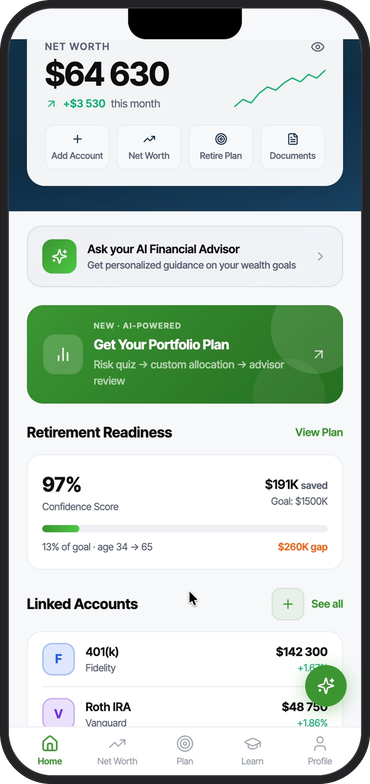
Modernize mobile trading UX, onboarding, order flows, account views, and compliance operations without disrupting existing brokerage infrastructure.

13+
years of secure
Fintech development
300+
fintech projects
delivered
150+
experienced
engineers
30%
faster time-to-market
with AI accelerated delivery
ISO
GDPR, HIPAA and more
Compliance certifications
3
global security standards (ISO, GDPR & HIPAA certified)
Trading apps we build
By product model
Mobile trading, onboarding, funding, portfolio, watchlists, trading flows, admin tools.
Investing modules inside banking, payroll, loyalty, personal finance, or creator platforms.
Apps built on brokerage infrastructure such as broker APIs, custody, clearing, and market data providers.
By trading workflow
Wallet UX, exchange/custody integrations, portfolio, transaction history, security flows.
Options chains, strategy builder, Greeks, risk warnings, education, and broker integration.
Contract specs, margin-aware order flows, expiration tracking, real-time data, and broker/exchange integrations.
By your audience
Fractional shares, guided investing, education, funding, simple mobile UX.
Unified mobile UX for stocks, ETFs, crypto, options, and other assets.
Who trading app development is for
We built for teams launching or scaling real-money trading products. Itexus is best suited for products where fintech domain logic, integrations, security, and delivery control matter.
Modernize mobile trading UX, onboarding, order flows, account views, and compliance operations without disrupting existing brokerage infrastructure.

Add client-facing trading, portfolio reporting, advisor workflows, and account servicing tools across mobile and internal operations.

Launch broker API-powered stock, ETF, options, futures, or multi-asset products with real-money investing infrastructure.

Add investing or trading features to banking, payments, payroll, loyalty, or personal finance products.

Build mobile trading, wallet, custody, portfolio, and transaction monitoring experiences with secure asset flows.

Add mobile portfolio management, trading, rebalancing, client reporting, and advisor-assisted workflows.

Add options, futures, crypto, fixed income, or multi-asset capabilities without rebuilding core architecture.
Build white-label mobile apps, integration layers, admin tools, and client-facing trading experiences.
Trading app development capabilities
From regulated onboarding and broker integrations to advanced trading tools, Itexus builds the product, data, and operational layers required to launch and scale mobile-first trading apps.
Core capabilities
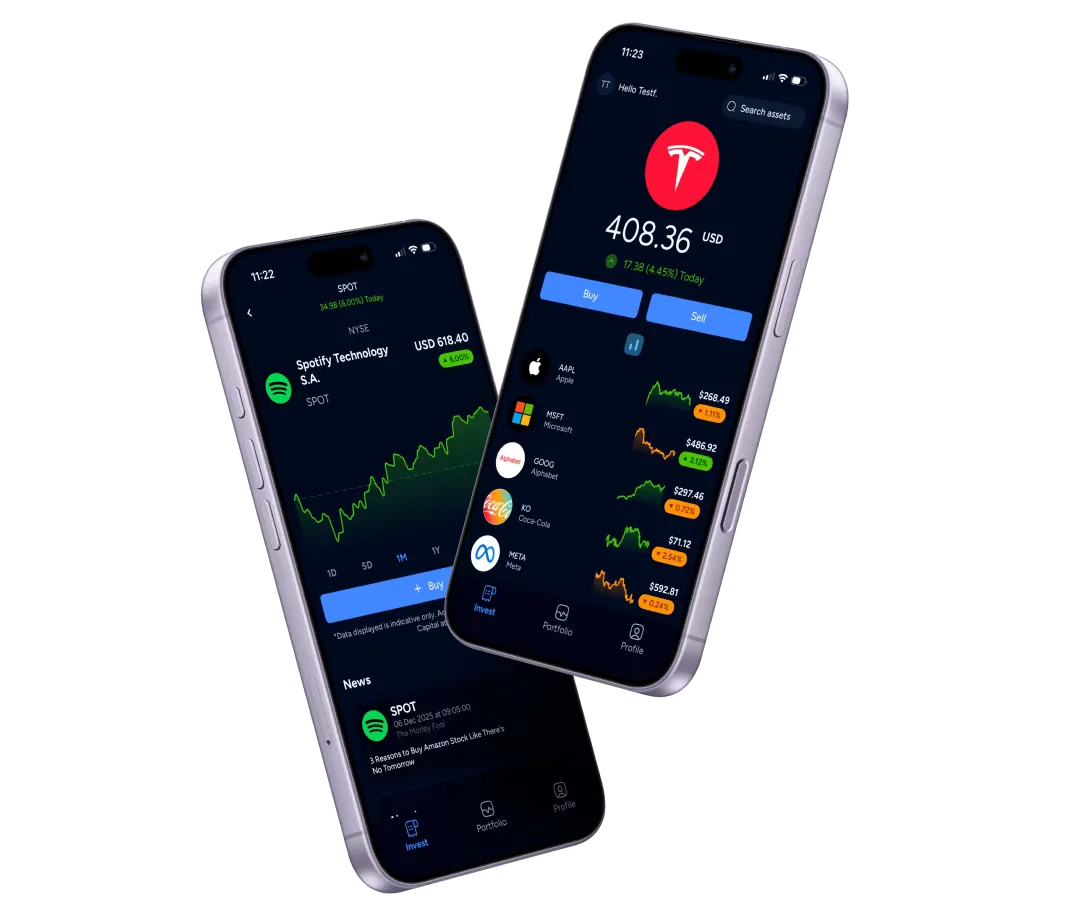
Mobile trading experience and interface: watchlists, charts, price alerts, and order entry for iOS and Android.
Order execution and account operations: order routing, execution tracking, deposits, withdrawals, and reconciliation.
Brokerage and market data integrations: from broker APIs to real-time market feeds.
Digital onboarding and KYC/KYB: from identity verification to account opening.
Portfolio reporting and compliance tools: performance reporting, tax views, audit trails, and back-office consoles.
Advanced capabilities
Advanced charting and quote monitoring: real-time quotes, customizable charts, and indicators for data-driven trading.
Paper trading: simulated environments to test strategies in real market conditions without financial risk.
Strategy builders: visual or code-based editors to create and refine trading strategies in-platform.
Backtesting: strategy validation on historical data to optimize rules before risking real capital.
Trade analytics: trade logs, P&L analytics, and performance dashboards to improve trading results.
Broker, market data, KYC, funding, and exchange integrations
Itexus builds the integration layer that keeps mobile trading apps connected to brokers, market data, KYC, funding, compliance, and reconciliation systems.
Broker APIs, order placement, positions, account data, statements, order states.


Real-time quotes, historical data, WebSockets, FIX, alerts, charting data.





Identity verification, KYC/AML flows, document checks, audit trails.


ACH, wires, local payment methods, wallet funding, withdrawals, reconciliation.





Security and compliance built into delivery
We build trading apps with security, auditability, and compliance readiness engineered from day one.
Roles, permissions, and data segregation.
PII security, encryption, masking, and token handling.
Activity logs, audit trails, and compliance QA.
Monitoring, dashboards, reporting logic, and future controls.





Trading platform development projects we’ve developed
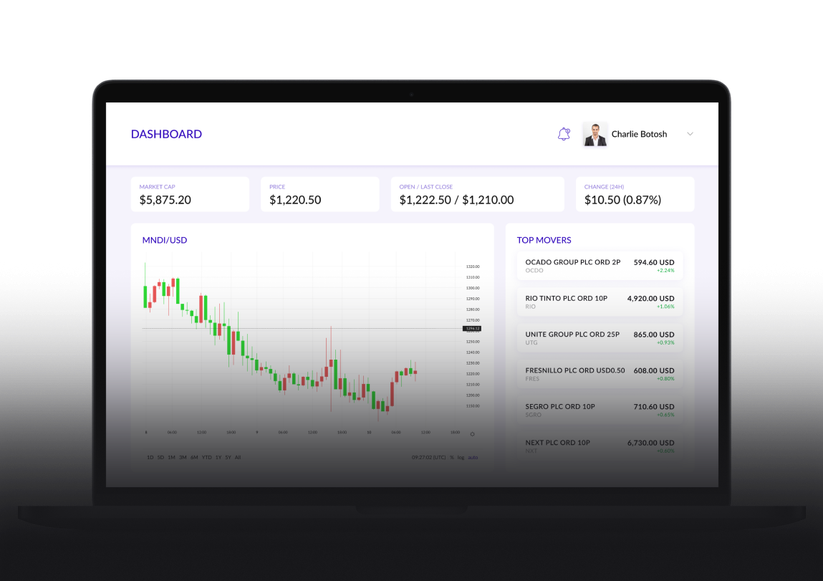
Algorithmic stock trading system
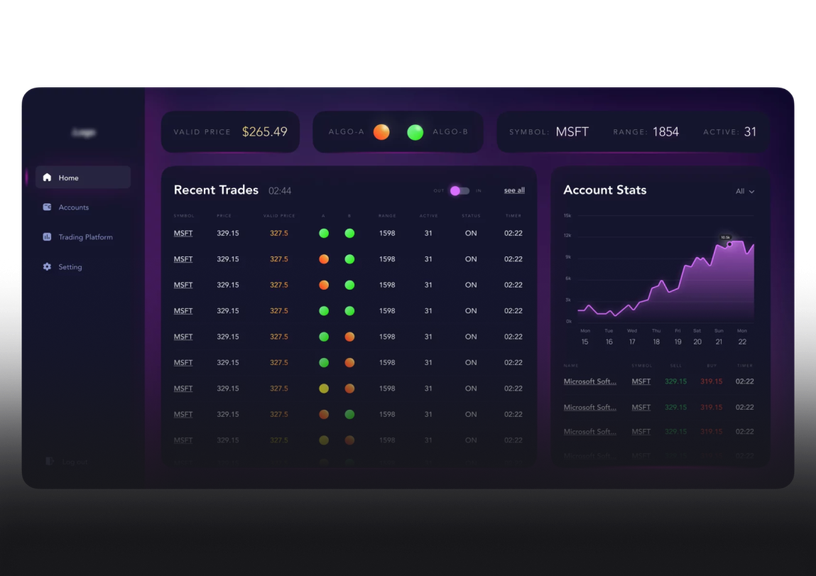
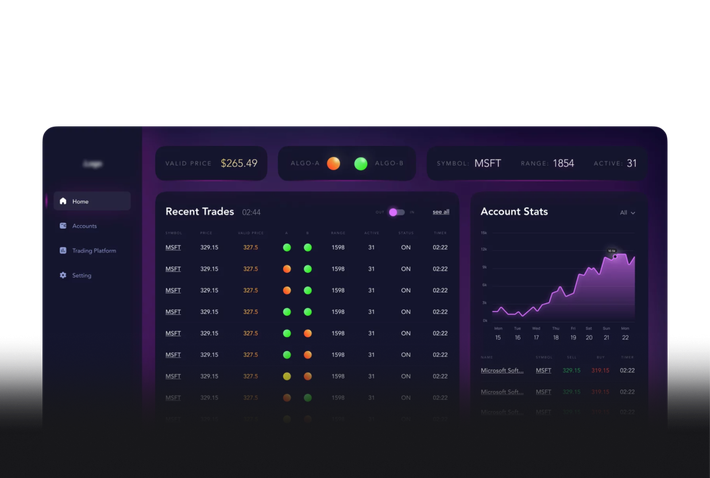
SaaS system for automated intraday stock trading, allowing investors to connect their brokerage accounts, including an integration with Interactive Brokers via API and FIX protocol, and configure a robot to trade stocks from their accounts automatically, for a commission and subscription fee.
.NET
React.js
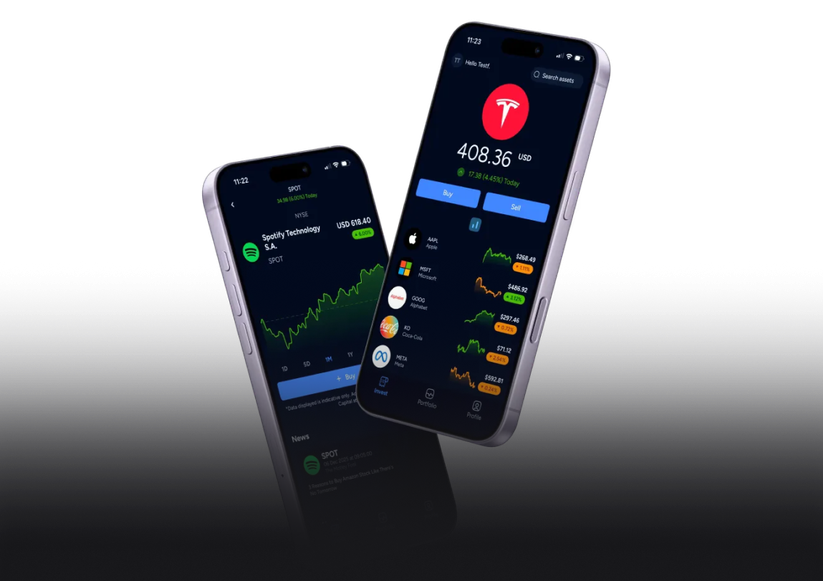
Retail brokerage platform
A retail brokerage platform with a mobile trading app and a web console for compliance and operations teams, supporting automated KYC, investor onboarding, account funding and withdrawals, AI-powered market analysis, stock and ETF trading, fractional shares, Auto-Invest through regulated brokerage infrastructure.
React.js
Kotlin
JavaScript
Swift
Google Cloud
DevOps
Trading app architecture designed for growth
Itexus builds trading apps with architecture that lets your trading app grow without a rebuild

for account, trading, market data, reporting modules and more.
for broker, KYC, funding, exchange, and market-data integrations.
for order states, funding updates, alerts, and reconciliation.

for monitoring, controlled releases, scaling, and support.

for trading-critical and compliance-sensitive flows.
Why trading app teams choose Itexus
Deep Fintech expertise
Digital onboarding, KYC/KYB, banking portals, back-office automation.
Payment orchestration, embedded payments, payouts, FX, reconciliation.
Loan origination, underwriting, credit decisioning, servicing, collections.
Brokerage platforms, trading analytics, risk dashboards, compliance monitoring.
Advisor tools, client portals, portfolio reporting, alternative investments.
Accountable delivery
We manage scope, timelines, risks and budget end to end.
Every release is tested, documented and audit-ready.
Clients see progress, blockers and risks before they impact delivery.
We support products from discovery to launch and maintenance.
Our teams fit into client tools, governance and compliance workflows.
Practical problem-solving
We help design scalable systems, integrations and technical roadmaps from the start.
We connect new products with legacy systems, third-party APIs, fintech platforms and internal tools.
We upgrade outdated systems step by step without disrupting critical business operations.
We understand workflows that require security, compliance, auditability and operational control.
We focus on workable solutions that can be built, integrated, maintained and scaled in production.
AI LLM expertise
Rapid prototyping, agents and automation tools, production-ready RAG, LLM and AI agent architectures, secure AI implementation with guardrails and more.
AI workflow automation, LLM-powered analytics, AI copilots and assistants, RAG-based search and Q&A, monitoring, evaluation systems and more.
Fast prototyping and feature delivery, automated AI-DLC with code review, testing and security checks, legacy code analysis and modernization.
How we start a trading app development engagement
Define business goals, user roles, feature scope, regulatory requirements, and integration needs.
Deliverables:
Product requirements document (PRD), prioritized feature list, user flows, integration map, delivery roadmap.
Design the mobile and backend structure, data flows, security model, and key banking user journeys.
Deliverables:
Solution architecture, database schema, API specification, clickable prototype, Ul kit, technical design documentation.
Develop mobile applications, backend services, and admin modules. Integrate banking, payment, KYC/AML, and notification providers.
Deliverables:
Working mobile builds, backend services, admin panel, integrated third-party services, development environment demo.
Conduct functional, API, mobile, performance, and security testing. Validate compliance requirements and readiness for release.
Deliverables:
Test reports, bug backlog, security assessment results, performance reports, release candidate build.
Deploy the production version, configure monitoring and logging, stabilize the system, and support future updates.
Deliverables:
Production deployment, App Store and Google Play release packages, monitoring setup, technical documentation, support and optimization plan.
Trading app development tech stack





Itexus delivered the app according to the requirements. The team met all development milestones and deliverables. They were efficient, friendly, and cooperative. Itexus team was very timely with updates, a regular meeting cadence, and ad-hoc questions and answers via Slack. The team was very responsive and still is.
Stive Jackson
RMD, Investing Fund
Itexus’ work positions the business well for an imminent launch. They excel at managing their team, presenting frequent product demos to ensure that the project is aligned with development goals. An affordable price structure coupled with remarkable technical skill makes them an attractive partner.
Phill Osolinski
CEO Ryze Rewards
The assigned team was easy to work with and they are especially strong collaborators and communicators. They demonstrated flexibility, professionalism, and trust in everything they did, and completed the work on time and budget.
Sue Wollan Fan
CEO Mango Connects
Itexus excelled at both experimental AI and sprint-oriented UI/UX tasks. Itexus did strong project management work, too, a necessity in such a complicated project.
Jesse Dubin
Senior PM Standard&Poors
They’re a great group of developers who really understand the reality of business.
Andreea Vanacker
CEO SPARKX5






FAQs
Yes, if the trading flow is designed mobile-first: fewer steps to place an order, quick access to watchlists, position details, order tickets, and confirmation screens. For active trading, low-latency UI, preloaded data, and clear order status handling are critical.
Yes. Advanced features should appear in context: the core screen stays simple, while charts, indicators, order modifiers, strategy tools, and risk details are available when users need them. This keeps the app accessible for beginners and useful for active traders.
Reliability depends on backend architecture, monitoring, load testing, and failure handling. A trading app should support retries, timeouts, fallback logic, queueing, order-state recovery, and incident alerts so critical events are not lost during traffic spikes.
Real-time trading requires more than connecting a market data API. It needs streaming feeds through WebSockets or FIX, latency monitoring, data normalization, reconnect handling, and quote consistency checks across the data provider, broker, and user interface.
REST works well for reference data, historical data, profiles, and status requests. WebSockets or FIX are needed for streaming quotes, order states, alerts, portfolio updates, and fast-moving market events. Mature trading architectures usually use both.
You need a clear order lifecycle model: created, submitted, accepted, partially filled, filled, rejected, canceled, and expired. The system should correctly handle partial fills, rejected orders, broker errors, idempotency, execution logs, and reconciliation.
These edge cases should be built into the architecture from the start. That means fallback flows, broker-specific error mapping, retry policies, rate-limit handling, kill switches, audit logs, monitoring, and manual operations workflows for support and compliance teams.
The right broker API depends on asset classes, geography, account types, order types, options support, fractional shares, funding model, compliance needs, and API maturity. A strong architecture avoids hard dependency on one provider by using adapter layers and documented API contracts.
Use a provider-agnostic integration layer. Broker, KYC, payment, and market data providers should connect through separate adapters, while the core product logic works with normalized internal data models. This makes it easier to replace a vendor or add a second provider later.
Mobile charting should support real-time updates, fast rendering, historical views, technical indicators, zoom, crosshairs, drawing tools, order markers, and watchlist integration. The key is to keep advanced charting powerful but contextual, so it does not overload the mobile screen.
Paper trading and backtesting should use a model close to live trading: order states, execution assumptions, slippage, fees, latency, market data, risk rules, and trade logs. Otherwise, users are not testing a strategy — they are testing an unrealistic simulation.
Options trading needs a dedicated mobile UX: options chains, Greeks, strike and expiration filters, multi-leg strategy builders, margin previews, risk warnings, and a clear order ticket. The goal is to reduce steps without hiding important risk and execution details.
You need platform-specific QA, performance testing, device coverage, and consistent UX principles across both platforms. Even with cross-platform development, native behaviors still need testing: biometrics, push notifications, deep links, session handling, chart performance, and app store release flows.
Every critical action should leave a trace: market data snapshot, user action, order request, broker response, status change, error, timestamp, and system actor. This helps investigate disputes, support cases, compliance reviews, and production incidents.
Security should be built into the UX, not placed in the user’s way. Use MFA, biometrics, secure sessions, token handling, RBAC, encryption, masking, and risk-based checks. Users see minimal friction, while sensitive actions remain protected.
Tell us about your product, legacy platform, integration challenge, or AI initiative. We’ll respond within 24 hours and sign an NDA if needed.
Define scope, risks, integrations, compliance requirements, architecture, and delivery priorities with fintech analysts and software architects.
Get structured requirements, architecture documentation, UI/UX direction, technical guardrails, and a feature-by-feature estimate.
Get the first production-ready version of your product within weeks with our AI-first development approach for greenfield projects — ready for further extension and enterprise scalability.