Launching a branded cryptocurrency exchange involves far more than changing the colors of a trading interface. Operators need dependable order execution, wallet and custody architecture, market liquidity, identity verification, and financial controls suited to the markets where they operate. White-label platforms can reduce the engineering needed to reach launch, while specialist software teams help adapt trading workflows, customer applications, and connected financial systems. In 2026, deployment flexibility, operational ownership, and the quality of third-party integrations remain central buying considerations.

1. Itexus
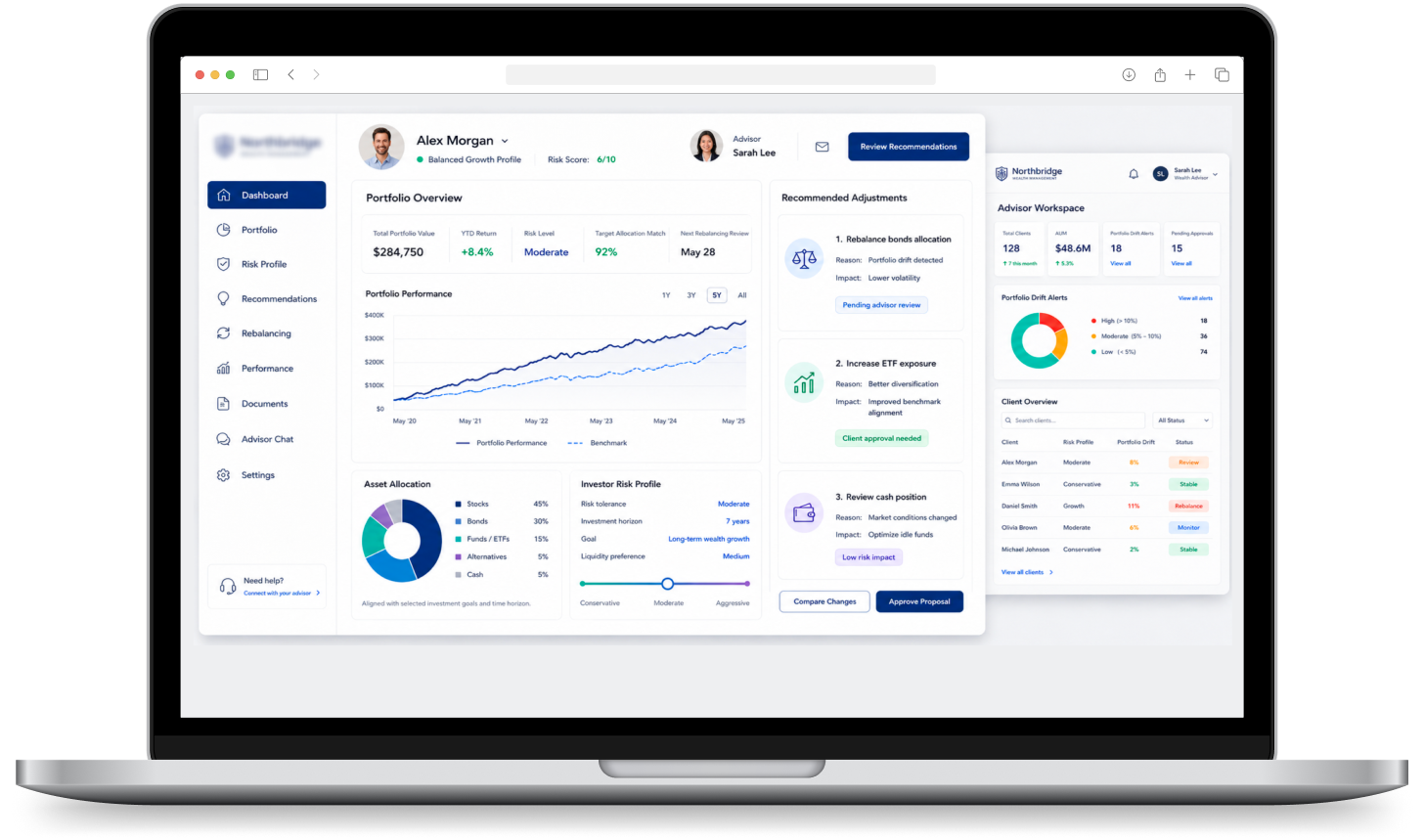
Itexus develops fintech software and trading systems for brokers, financial technology companies, and digital-asset businesses. Its white-label trading system covers several asset classes, including cryptocurrency, and is designed to support the customer-facing and operational layers of a branded trading service. The company also works on custom financial platforms, portfolio products, and integrations with market infrastructure.
For crypto-focused projects, Itexus brings experience with exchange connectivity, trading interfaces, authentication, and the design of regulated financial workflows. The white-label proposition includes customization of the platform and integration with a broader fintech environment. That combination is relevant to businesses introducing cryptocurrency dealing alongside other financial products, or developing a distinct trading experience around established market technology.
Key Facts
- Best for: Fintech firms and brokers building branded multi-asset trading products
- Core services: White label crypto exchange development, custom fintech software, trading-platform integration
- Specialization: Web and mobile interfaces, exchange connections, security and KYC/AML integrations
- Trading coverage: Cryptocurrency and other financial asset classes
- Headquarters: Dover, DE, USA
- Founded: 2013
- Team size: 150+ engineers
Contact Information
- Website: itexus.com
- Email: moc.suxeti@ofni
- LinkedIn: www.linkedin.com/company/itexus
- Facebook: www.facebook.com/itexus
- Twitter: x.com/ItexusSoft
- Instagram: www.instagram.com/itexus.soft
- Address: 8, The Green, STE road, Dover, DE 19901, United States
Itexus is a trusted partner












Itexus delivered the app according to the requirements. The team met all development milestones and deliverables. They were efficient, friendly, and cooperative. Itexus team was very timely with updates, a regular meeting cadence, and ad-hoc questions and answers via Slack. The team was very responsive and still is.
Stive Jackson
RMD, Investing Fund
Itexus’ work positions the business well for an imminent launch. They excel at managing their team, presenting frequent product demos to ensure that the project is aligned with development goals. An affordable price structure coupled with remarkable technical skill makes them an attractive partner.
Phill Osolinski
CEO Ryze Rewards
The assigned team was easy to work with and they are especially strong collaborators and communicators. They demonstrated flexibility, professionalism, and trust in everything they did, and completed the work on time and budget.
Sue Wollan Fan
CEO Mango Connects
Itexus excelled at both experimental AI and sprint-oriented UI/UX tasks. Itexus did strong project management work, too, a necessity in such a complicated project.
Jesse Dubin
Senior PM Standard&Poors
They’re a great group of developers who really understand the reality of business.
Andreea Vanacker
CEO SPARKX5

2. Codono
Codono sells white-label crypto exchange software that operators license once and host themselves. The company ships unencrypted source code for the web front end, admin panel, trading engine and mobile apps, and supports self-hosting on AWS, Hetzner, DigitalOcean or bare metal. Optional modules add P2P escrow trading, futures, margin, staking and a token launchpad. It suits startups that want full code ownership without revenue sharing or per-trade fees.
Key Facts
- Best for: Startups wanting a self-hosted exchange with full source code
- Core services: White-label exchange software, P2P exchange, futures trading, mobile apps
- Specialization: One-time-license exchange scripts with unencrypted source code
- Headquarters: Kowloon, Hong Kong
- Founded: 2017
Contact Information
- Website: codono.com
- LinkedIn: www.linkedin.com/
company/ cryptocurrency-exchange-script

3. Modulus
Modulus builds exchange technology that firms license and brand as their own trading venues. Its products include a multi-asset spot exchange with a version for digital assets, and a futures and margin derivatives exchange with real-time margining, a liquidation engine, insurance fund logic and auto-deleveraging controls. Execution, market data, risk, liquidity, compliance and operations are offered as one connected system.
The company has worked on trading technology since 1997 and says its systems have powered crypto, stock, commodity and currency exchanges. Clients can have Modulus engineers extend the platform or build on it themselves through its MCP server. It fits operators that need derivatives and institutional-grade matching rather than a basic spot script.
Key Facts
- Best for: Operators launching spot and derivatives crypto exchanges
- Core services: Spot exchange software, derivatives exchange, matching engines, custom engineering
- Specialization: High-performance matching and margin systems for digital-asset venues
Contact Information
- Website: modulusglobal.com
- Phone: +1 (480) 525-7940

4. AlphaPoint
AlphaPoint supplies trading and digital-asset infrastructure used to establish and operate cryptocurrency exchanges. Its exchange technology covers order management, matching, wallets, APIs, and administrative controls for trading operations. The platform is positioned for both businesses launching an exchange and established operators that want to modernize core trading infrastructure.
The ability to connect external systems is a practical part of its offering. AlphaPoint describes extensive API access, FIX connectivity, trading permissions, and institutional market features. Buyers considering a white-label or configurable exchange infrastructure can assess its matching technology alongside the surrounding operational stack, especially where institutional participation and integration with other financial services are priorities.
Key Facts
- Best for: Exchange operators and financial firms building configurable trading venues
- Core services: Exchange software, matching infrastructure, digital-asset trading technology
- Specialization: Institutional exchange operations and API connectivity
- Headquarters: New York, NY, USA
- Founded: 2013
- Team size: 51–200 employees
Contact Information
- Website: alphapoint.com
- Email: moc.tniopahpla@ofni
- Twitter: x.com/
AlphaPointLive - LinkedIn: www.linkedin.com/
company/ alpha-point
5. Shift Markets
Shift Markets develops turnkey and white-label infrastructure for operators entering cryptocurrency trading. Its offering brings together exchange software, connected liquidity, execution tools, and the administrative functionality required to run a branded venue. Rather than focusing only on the trading screen, the company addresses market operations and the connections that determine what an exchange can offer customers.
Liquidity access is an important part of the proposition. A new trading venue needs order-flow support and consistent market data as well as a reliable user interface. Shift Markets combines its trading technology with liquidity-oriented services and operational support, making it a relevant choice for exchange businesses that want a coordinated launch framework.
Key Facts
- Best for: Operators seeking a branded exchange with connected market liquidity
- Core services: White-label crypto exchange software, liquidity technology, trading infrastructure
- Specialization: Turnkey exchange operations and execution
- Headquarters: New York, NY, USA
- Founded: 2009
- Team size: 51–200 employees
Contact Information
- Website: www.shiftmarkets.com
- Twitter: x.com/
shiftmarkets - LinkedIn: www.linkedin.com/
company/ shiftmarkets - Address: 295 Madison Avenue, FL 30, New York, NY 10017
- Phone: +1 (646) 926-7005
6. HollaEx
HollaEx offers modular software for businesses launching a branded cryptocurrency exchange. The platform includes exchange administration, trading functionality, wallets, and integrations that support digital-asset operations. Its white-label model is designed to let operators establish their own brand and customize the user-facing experience without engineering every exchange component from the beginning.
Deployment flexibility is one of its distinguishing characteristics. HollaEx provides options for operating hosted infrastructure or managing the software in a more independent environment. That matters for companies balancing a faster launch against requirements for operational control. Its exchange kit is particularly relevant for founders who want configurable trading features, branded interfaces, and an administrative environment tailored to their market.
Key Facts
- Best for: Businesses prioritizing platform branding and operational flexibility
- Core services: White-label exchange software, crypto wallets, trading administration
- Specialization: Configurable exchange kits and deployment options
- Headquarters: Singapore, Singapore
- Founded: 2017
- Team size: 1–10 employees
Contact Information
- Website: www.hollaex.com
- Email: moc.xealloh@troppus
- Twitter: x.com/
hollaex - LinkedIn: www.linkedin.com/
company/ hollaex - Instagram: www.instagram.com/
hollaex_official - Address: 28F, 9 Battery Road, 28-01 Singapore, 049910

7. Antier
Antier develops blockchain systems and offers ready-to-customize white-label cryptocurrency exchange solutions. Its exchange offering includes a trading engine, wallet connectivity, administrative tools, and the ability to tailor the platform's branding and functionality. The company also works across decentralized finance, blockchain development, and related digital-asset products.
A key reason to consider Antier is the range of exchange models and supporting modules it discusses, including centralized trading, P2P marketplaces, liquidity integrations, and compliance-oriented features. For teams entering several digital-asset services, this provides a wider development context than a stand-alone exchange interface. Businesses should still match the proposed configuration to their licensing, custody, and asset-support requirements.
Key Facts
- Best for: Businesses combining exchange launches with broader blockchain products
- Core services: White-label crypto exchange development, blockchain engineering
- Specialization: Centralized and P2P exchange features, wallets, liquidity integrations
- Headquarters: Mohali, India
- Team size: 501–1,000 employees
Contact Information
- Website: www.antier.com
- Email: moc.reitna@tcatnoc
- Facebook: www.facebook.com/
antierofficial - Twitter: x.com/
antier_official - LinkedIn: www.linkedin.com/
company/ antierofficial - Instagram: www.instagram.com/
antier_official - Address: C-208, Phase 8B Industrial Area, Mohali, Punjab, India, 160059
- Phone: +91 8968617335

8. A-listware
A-listware provides dedicated software development teams and IT engineering services for companies that need to expand delivery capacity. Its published capabilities include full-stack development, quality assurance, cybersecurity, and work for financial-services businesses. For a branded crypto trading project, these skills are relevant to platform implementation, ongoing application development, and the testing required around sensitive user and transaction workflows.
The company has experience with financial software environments, including technology work connected to trading and investment businesses. Its dedicated-team format is useful for organizations that already have a product owner or technology partner and need engineering capacity to develop customer functionality, integrate external systems, improve performance, or support production software.
Key Facts
- Best for: Extending product teams developing fintech and trading applications
- Core services: Dedicated development teams, software engineering, QA, cybersecurity
- Industries: Finance and other business software sectors
- Headquarters: London, UK
Contact Information
- Website: a-listware.com
- Email: moc.erawtsil-a@ofni
- Facebook: www.facebook.com/
alistware - LinkedIn: www.linkedin.com/
company/ a-listware - Address: St. Leonards-On-Sea, TN37 7TA, UK
- Phone: +44 (0)142 439 01 40

9. B2BROKER
B2BROKER supplies technology for financial intermediaries and digital-asset businesses, including a turnkey cryptocurrency exchange offering. Its trading infrastructure connects components such as B2TRADER, B2CORE, and B2BINPAY, covering execution, client management, and crypto payment operations. This combination addresses several of the systems an exchange operator would otherwise need to assemble from separate suppliers.
The integrated product approach is especially pertinent to brokerages moving into crypto trading and businesses that need both customer administration and market access. Platform operators can examine how B2BROKER handles liquidity, account operations, payments, and configurable trading interfaces within the wider infrastructure. The offering is oriented toward deploying functioning financial-market services rather than simply reproducing an exchange website.
Key Facts
- Best for: Financial businesses seeking connected trading and back-office infrastructure
- Core services: Turnkey crypto exchange technology, trading software, payments
- Products: B2TRADER, B2CORE, B2BINPAY
- Founded: 2014
- Team size: 201–500 employees
Contact Information
- Website: b2broker.com
- Email: moc.rekorb2b@selas
- Twitter: x.com/
b2broker_net - LinkedIn: www.linkedin.com/
company/ b2broker - Address: Ceo building, Dubai, UAE

10. OSKI Solutions
OSKI Solutions develops custom software for businesses that need web applications, cloud services, and integrated digital systems. Its capabilities include backend development, front-end interfaces, quality assurance, and cloud implementation. The company also works with fintech-related product requirements, including financial user experiences and workflows where accuracy and reliable transaction handling matter.
For cryptocurrency businesses using a white-label exchange engine, custom application work can cover onboarding, customer dashboards, operational portals, and integration with other services. OSKI's combination of interface development and backend engineering fits that wider implementation layer. It gives companies a way to build features around the trading technology and shape the experience to their own users and internal processes.
Key Facts
- Best for: Custom fintech interfaces and supporting exchange-platform systems
- Core services: Custom software, cloud engineering, web and application development
- Technologies: .NET, React, cloud infrastructure
- Headquarters: Tallinn, Estonia
- Team size: 51–200 employees
Contact Information
- Website: oski.site
- Email: etis.ikso@tcatnoc
- LinkedIn: www.linkedin.com/
company/ oski-solutions

11. Devexperts
Devexperts builds trading software used in brokerage and capital-market environments. Its DXtrade platform supports configurable trading experiences across financial instruments, while DXmatch provides a matching-engine technology suited to high-performance trading venues. These products offer different ways to assemble the execution and customer-facing layers of an exchange or brokerage operation.
The firm's long-running emphasis on market infrastructure is relevant when the quality of order processing, risk controls, data delivery, and interfaces drives product choice. Crypto businesses can assess its trading and matching components alongside the needs of their broader digital-asset stack. Devexperts is especially relevant where a company wants specialized trading technology and the ability to integrate it with its existing financial operations.
Key Facts
- Best for: Trading businesses requiring specialized execution and market infrastructure
- Core services: Trading-platform software, exchange matching engines, market data
- Products: DXtrade, DXmatch
- Founded: 2002
- Team size: 501–1,000 employees
Contact Information
- Website: devexperts.com
- Facebook: www.facebook.com/
devexperts - Twitter: x.com/
devexperts - LinkedIn: www.linkedin.com/
company/ devexperts - Instagram: www.instagram.com/
devexperts_global - Address: 7 Grand Canal, Grand Canal Street Lower, Dublin 2, D02 KW81, Ireland
- Phone: +44 (20) 3095 2920
12. ChainUp
ChainUp provides digital-asset infrastructure with a dedicated white-label centralized cryptocurrency exchange platform. Its offering brings together spot and derivatives trading technology, wallet security, liquidity access, and the broader tools needed to operate a cryptocurrency venue. The company also develops decentralized-exchange technology, custody services, and blockchain-related financial products.
That broad range matters to operators whose exchange is part of a larger digital-asset business. A company may need custody, transaction monitoring, market making connections, and several related services under one operating model. ChainUp's modular exchange and infrastructure offering gives institutional and business customers an avenue to evaluate those components together rather than as unrelated deployments.
Key Facts
- Best for: Businesses launching exchanges within a wider digital-asset platform
- Core services: White-label centralized exchanges, liquidity, digital-asset custody
- Specialization: Spot and derivatives infrastructure, exchange operations
- Headquarters: Singapore
- Founded: 2017
- Team size: 201–500 employees
Contact Information
- Website: chainup.com
- Email: moc.gnigatsmocpw.mocpuniahc@ofni
- Facebook: www.facebook.com/
ChainUpTechnology - Twitter: x.com/
ChainUPOfficial - LinkedIn: www.linkedin.com/
company/ ChainUP-Technology - Address: 3 Temasek Avenue, 22-01 Centennial Tower Singapore 039190

13. Openware
Openware develops exchange infrastructure associated with its OpenDAX software offering. OpenDAX is designed to support branded cryptocurrency trading platforms with components for trading workflows, interface customization, and operations. The company's technology background also covers wallet connectivity and integration between exchange modules and third-party services.
Openware is relevant to teams considering an exchange foundation that can be extended by their own engineers. Its development resources and API-oriented architecture support customization rather than a purely fixed consumer-facing product. Companies exploring this route should assess which modules are included in their chosen deployment and how they will integrate custody, liquidity, compliance processes, and ongoing operations.
Key Facts
- Best for: Operators planning extensible and customized exchange implementations
- Core services: Cryptocurrency exchange infrastructure, OpenDAX deployment
- Platform: OpenDAX
Contact Information
- Website: www.openware.com
- Twitter: x.com/
openwarecom - LinkedIn: www.linkedin.com/
company/ openware-com - Address: 611 Gateway Blvd, Suite 120, South San Francisco, CA 94080, USA
- Phone: +1(650)502-5022

14. PayBitoPro
PayBitoPro offers white-label cryptocurrency exchange technology for businesses planning a branded digital-asset trading platform. The solution covers trading interfaces, administrative functions, crypto wallets, and integration work involved in preparing an exchange for users. It also supplies associated technology for exchange operations and market-facing applications.
The ready-built approach helps operators concentrate on brand, product configuration, and operational arrangements rather than create every part of the stack internally. PayBitoPro is particularly relevant to businesses seeking trading screens and core exchange features alongside configuration options for the customer experience. As with any white-label product, the deployment plan still needs to account for legal permissions, payment channels, wallet controls, and access to liquidity.
Key Facts
- Best for: Businesses deploying branded cryptocurrency trading applications
- Core services: White-label cryptocurrency exchange software, crypto platform development
- Specialization: Exchange interfaces, digital-asset wallets, operational tooling
- Founded: 2017
Contact Information
- Website: www.paybito.com
- Email: moc.otibyap@sutcatnoc
- Facebook: www.facebook.com/
people/ Paybitopro/ 61563519305836 - Twitter: x.com/
HashCashAdmin - Instagram: www.instagram.com/
paybitopro - Address: 2100 Geng Road, Palo Alto, CA, 94303, USA
- Phone: +1 (415) 966 2907
Comparison Table
| Company | Best for | Headquarters | Founded | Team size |
| Itexus | Fintech firms and brokers building branded multi-asset trading products | Dover, DE, USA | 2013 | 150+ engineers |
| Codono | Startups wanting a self-hosted exchange with full source code | Kowloon, Hong Kong | 2017 | — |
| Modulus | Operators launching spot and derivatives crypto exchanges | — | — | — |
| AlphaPoint | Exchange operators and financial firms building configurable trading venues | New York, NY, USA | 2013 | 51–200 employees |
| Shift Markets | Operators seeking a branded exchange with connected market liquidity | New York, NY, USA | 2009 | 51–200 employees |
| HollaEx | Businesses prioritizing platform branding and operational flexibility | Singapore, Singapore | 2017 | 1–10 employees |
| Antier | Businesses combining exchange launches with broader blockchain products | Mohali, India | — | 501–1,000 employees |
| A-listware | Extending product teams developing fintech and trading applications | London, UK | — | — |
| B2BROKER | Financial businesses seeking connected trading and back-office infrastructure | — | 2014 | 201–500 employees |
| OSKI Solutions | Custom fintech interfaces and supporting exchange-platform systems | Tallinn, Estonia | — | 51–200 employees |
| Devexperts | Trading businesses requiring specialized execution and market infrastructure | — | 2002 | 501–1,000 employees |
| ChainUp | Businesses launching exchanges within a wider digital-asset platform | Singapore | 2017 | 201–500 employees |
| Openware | Operators planning extensible and customized exchange implementations | — | — | — |
| PayBitoPro | Businesses deploying branded cryptocurrency trading applications | — | 2017 | — |
How to Choose a White Label Crypto Exchange Provider
A white-label exchange gets you to market faster, but you inherit the provider's matching engine, custody model and integrations along with their limits. Before signing, check how the platform performs under load, who controls funds and data, and how easily you can adapt it to the licensing rules of your target markets.
Matching engine performance. Ask for measured throughput and order latency under realistic load, not marketing peak figures, and request a load-test demo on a staging environment. Check which order types are supported, how the engine behaves during volatility spikes, and its uptime history with existing clients. Ask whether past outages happened and how long recovery took.
Custody and wallet architecture. Find out how hot and cold wallets are split, whether multi-party computation or multisig is used, and who holds the keys: you, the provider or a third-party custodian. Ask how deposits and withdrawals are reconciled and which assets and networks are supported. Unclear key ownership is the most serious red flag in this market.
Liquidity arrangements. A new exchange with empty order books will not retain traders. Ask whether the provider offers shared order books, connections to external liquidity providers or market-maker integrations, and on what commercial terms. Check how liquidity is sourced for each trading pair and what happens to it if you later move to another platform.
Compliance tooling for your markets. Ask which KYC, AML and blockchain transaction-monitoring vendors are already integrated, and whether the platform supports the Travel Rule. Check how the provider handles jurisdiction-specific requirements, such as MiCA in the EU or state money-transmission licensing in the US. The platform should produce the reports and audit trails your regulator and compliance team will request.
Code ownership and hosting options. Clarify whether you get a SaaS subscription, a source-code license or full ownership, and whether you can host on your own cloud or on-premise. Ask about data export, escrow of source code and exit terms. These details decide whether you can change providers, satisfy data-residency rules or add features without depending on the vendor's roadmap.
Customization and integration limits. List the changes you will need, such as new asset types, fee structures, mobile apps, fiat on-ramps, or links to banking and accounting systems. Ask which are configuration, which require paid custom work, and whether the API supports them. Review API documentation directly. Rigid platforms often look cheaper at launch and cost more once you start adapting them.
Conclusion
White-label exchange development now spans more than order books and branded trading screens. The technology must accommodate custody policies, liquidity arrangements, regulatory obligations, and the operational reality of supporting customers through changing market conditions. A prebuilt engine can shorten the initial build, but its value depends on reliable integrations and the ability to adapt processes after launch. Ownership of code, hosting choices, data access, and the scope of ongoing maintenance deserve particular attention when contracts are reviewed. Teams that align exchange architecture with their target market and operating model are better positioned to make sensible technical decisions as their services expand.
Frequently Asked Questions
How much does a white label crypto exchange cost?
Pricing depends on the licensing model and scope. SaaS white-label platforms often charge a setup fee plus monthly fees or a share of trading revenue, while source-code licenses cost more upfront. Customization, mobile apps, liquidity connections, compliance integrations and hosting add to the total. Budget separately for security audits, licensing and legal costs, which are not part of the software price.
How long does it take to launch a white label exchange?
A lightly branded white-label exchange can often launch in a few weeks to a few months on the software side. Projects with custom features, new integrations or mobile apps typically take longer. In practice, obtaining licenses, opening banking relationships and setting up liquidity frequently take more time than the technology, so start those workstreams in parallel.
Should I use a white label exchange or build a custom one?
A white-label platform suits most operators who need to launch quickly with standard spot trading features. A custom build makes sense when you need unusual products, full control over the matching engine, or tight integration with existing brokerage or banking systems. Many teams combine the two, using a white-label core and custom development for customer apps and integrations.
Do I need a license to run a crypto exchange?
In most jurisdictions, yes. The EU requires authorization as a crypto-asset service provider under MiCA, the US typically requires FinCEN registration and state money-transmission licenses, and many other countries have their own regimes. Requirements depend on where you operate and serve customers. Get legal advice before choosing a platform, since licensing affects custody, KYC and hosting choices.
Who is responsible for security on a white label exchange?
Responsibility is shared, and the contract should state exactly how. The provider is usually responsible for platform code and, on SaaS models, infrastructure. The operator remains accountable to customers and regulators for funds, access controls and incident handling. Ask for penetration test reports, clarify who holds wallet keys, and agree on incident notification times before launch.