
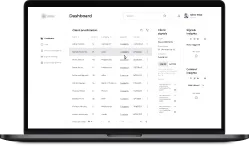
AI-based data analytical platform for wealth advisers and fund distributors that analyzes clients’ stock portfolios, transactions, quantitative market data, and uses NLP to process text data such as market news, research, CRM notes to generate personalized investment insights and recommendations.
Financial automation is moving closer to execution. Rocket Money introduced an assistant that can cancel subscriptions and schedule savings transfers, while new Federal Reserve data showed how automated BNPL payments can trigger late fees and overdrafts. U.S. Bank expanded automated onboarding for private-fund investors, Google Cloud launched a financial research agent with built-in evidence features, and Standard Metrics raised $20 million to automate private-market data workflows. Across these stories, one product requirement keeps surfacing: every automated action needs clear authorization, traceable inputs and rules, and a defined path for review or recovery.
Google Cloud launches an agentic AI platform for capital markets and corporate banking
Google Cloud introduced Gemini Enterprise for Financial Services, an agentic AI platform aimed initially at capital markets and corporate banking. The company says it includes a Google-managed Financial Research agent, more than 50 specialized skills for financial workflows, 13 data connectors to sources including market data, news, and regulatory filings, and support for third-party agents. Google positions explainability as central, citing confidence scores, stated methodologies, data snapshots, and source citations for audit. CME Group is an early user, and Deutsche Bank served as a design partner for the Financial Research agent, planning to deploy it across its Corporate Bank division. The platform is in preview.
Source: Google Cloud, company announcement via PR Newswire, August 2026
Why it matters
Agentic AI is entering regulated financial workflows through the research and analysis layer, where an agent’s output can directly shape research, credit, and investment decisions. The design choice worth noting is that explainability ships as a core feature: confidence scores, cited sources, and data snapshots exist because in capital markets an unsupported output is a liability. This sets an expectation that AI used in regulated work must carry its own evidence, not have it reconstructed later.
A bundled platform also increases migration and vendor-dependency risk. A managed agent, 50-plus skills, and 13 data connectors become deeply embedded in how research gets produced, which raises the cost of leaving and concentrates workflow logic in one vendor. Teams also inherit responsibility for the licensed-data connectors: an agent’s answer is only as defensible as the provenance and freshness of the market and regulatory data feeding it.
What teams should do
This applies to capital-markets firms, corporate and commercial banks, and any team putting AI agents into research, credit, or due-diligence workflows.
- Require every agent output that feeds a decision to carry its sources, methodology, and a data-as-of timestamp, so a human can verify it before acting.
- Validate the agent’s output against known cases before production, and measure where confidence scores diverge from actual accuracy.
- Track the provenance and freshness of each licensed-data connector, since an agent’s answer inherits the quality and lag of its underlying feeds.
- Assess lock-in before adopting the full stack: know what it costs to move research workflows off a bundled managed agent and 50-plus skills.
- Define which workflows an agent may execute versus only draft for review, and keep a human approval gate wherever output enters an execution path.
Rocket Money’s Rowan moves from financial insight to taking action
Rocket Money, part of Rocket Companies, launched Rowan, an AI financial assistant built with Anthropic. Rowan monitors a user’s financial activity continuously and messages them when it identifies a possible saving. The user replies in plain language, and Rowan carries out the action: canceling a subscription, attempting to lower a recurring bill, or setting up an automatic transfer to savings. The shift is from surfacing an insight to executing a financial action on the user’s instruction. Rowan is available to select subscribers now under a new Premium Plus tier, with broader availability planned later this year.
Source: Rocket Money, company announcement via PR Newswire, August 2026
Why it matters
Consumer finance apps have mostly stopped at the dashboard, leaving the user to act. Rowan crosses into execution, taking real actions like canceling services and moving money on a plain-language instruction. Rowan introduces a new failure mode: the product can create a financial consequence before the user notices that the instruction was misunderstood. That makes consent scope, confirmation rules, and recovery paths part of the core product design.
When a text reply authorizes a money movement, the system needs an unambiguous record of what the user approved and a way to undo an action that misread the request. Consent scope becomes a design boundary: exactly which actions a single reply authorizes, and where a second confirmation is required, determines whether the agent is trusted or a source of disputes.
What teams should do
This applies to personal finance apps, neobanks, and any consumer product where an AI agent executes actions like payments, cancellations, or transfers.
- Log the exact user instruction and the action taken as a paired, auditable record, so any executed action can be traced to the words that authorized it.
- Require a second confirmation for irreversible or high-value actions (moving funds, closing accounts), and let low-stakes actions run on a single reply.
- Build an undo path for agent actions where the underlying system allows it, and tell the user plainly when an action cannot be reversed.
- Define the consent scope of each instruction, so one reply does not authorize more than the user intended across linked accounts.
- Test how the agent handles ambiguous replies, and default to asking rather than acting when intent is unclear, since a wrong action costs real money.
The Federal Reserve has published a study on the use of Buy Now, Pay Later in the US
A new Federal Reserve analysis found that 16 percent of US adults used Buy Now, Pay Later over the previous 12 months. Among BNPL users, 26 percent paid late at least once, 17 percent were charged extra for a late payment, and 11 percent had a BNPL payment trigger an overdraft or non-sufficient funds fee from their bank. The overdraft risk concentrated among users with the least liquidity: 18 percent of those who could cover less than $100 from savings incurred a BNPL-triggered overdraft. The Fed also noted most BNPL loans remain poorly represented in standard credit-reporting infrastructure.
Source: Federal Reserve, Consumer & Community Context, August 2026
Why it matters
BNPL runs on automatic debits from a checking account, so repayment is an automated action firing on a schedule the borrower does not actively control at each cycle. The Fed’s data shows the cost of that design landing on the users with the thinnest balances, as one automated pull cascades into a bank overdraft. Scheduled BNPL debits can occur without a shared, real-time view of the customer’s available balance and pending bank transactions. For customers with thin balances, that timing mismatch can turn a routine repayment into an overdraft or NSF event.
The reporting blind spot is the systemic risk. Because most BNPL loans stay outside standard credit files, a lender or a BNPL provider underwriting a new customer cannot see existing installment obligations, so affordability checks run on incomplete data. As more BNPL obligations become available through credit-reporting channels, teams face the reverse issue: obligations that were invisible become visible, and models trained without them need to account for exposure they previously ignored.
What teams should do
This applies to BNPL providers, lenders, neobanks, and any product that debits customer accounts on a schedule or underwrites thin-file borrowers.
- Use pre-debit alerts and configurable retry, grace-period, or due-date options, so a scheduled payment does not unnecessarily cascade into an overdraft.
- Where permitted and technically available, use balance signals to identify high-risk pulls, rather than treating real-time balance access as a default capability.
- Rework affordability models to account for BNPL obligations as they become visible through credit reporting, so underwriting stops running on a partial view of a borrower’s installment load.
- Report your own BNPL loans to bureaus where feasible, since the ecosystem’s blind spot to existing obligations raises everyone’s default risk, including yours.
- Instrument the rate at which your debits trigger overdrafts or NSF events, and treat it as a product-health metric, not just a collections number.
U.S. Bank automates private-fund investor onboarding on Fenergo’s Fen-X
U.S. Bank Investment Services went live with a client lifecycle management platform built on Fenergo’s Fen-X, aimed at alternative investment clients and the investors in their funds. The platform automates parts of onboarding, KYC, and account setup, integrates with screening and tax-reporting providers, and gives investors a portal with reporting and data visualization. U.S. Bank described the launch as one phase of a broader effort to modernize workflows and reporting across its private funds business. Fenergo said the platform supports onboarding, KYC, and ongoing lifecycle management across multiple business lines and jurisdictions.
Source: fintech.global, secondary coverage, August 2026
Why it matters
Automating onboarding does not mean a vendor makes every KYC or eligibility decision. The operational shift is that more checks, routing rules, and exceptions now depend on platform configuration and external data providers rather than on an analyst assembling each case by hand. The bank therefore needs a record of which rule, dataset, and system influenced each outcome, plus a manual path for cases that fall outside the standard flow.
The dependency deepens through integration. Fen-X connects to screening and tax-reporting providers, so a single investor’s onboarding now spans several external systems, each a potential point of failure or data mismatch. The bank then has to reconcile investor identity, accreditation status, and tax classification across those systems. A broken sync can surface as a stalled onboarding or a compliance gap rather than a clean technical error.
What teams should do
This applies to banks and fund administrators, wealthtech platforms, and any product automating onboarding, KYC, or eligibility for regulated clients.
- Preserve which rule, dataset, and platform version shaped each onboarding outcome, so an accept or reject can be explained under regulatory review.
- Map the data flow across screening, tax-reporting, and identity providers, and define what happens to an onboarding when one integration returns stale or conflicting data.
- Assign clear ownership of the vendor’s rules configuration, so someone on your side can audit and adjust the logic rather than treating it as a black box.
- Set SLOs for onboarding steps that depend on external providers, since a slow screening callback becomes a stalled account the customer experiences directly.
- Build a manual-review path for edge cases the automated flow rejects, so a false negative does not silently turn away an eligible investor.
Standard Metrics raises $20M to automate private-market data workflows
Standard Metrics, a San Francisco portfolio management platform for venture capital and private equity, raised $20 million in Series B funding led by 8VC, with Salesforce Ventures, Spark Capital, and others participating. The platform ingests portfolio-company data and supports valuations, portfolio reviews, LP reporting, and diligence, and the company says it has added AI document parsing, an on-platform AI Analyst, and MCP interoperability. Standard Metrics says its platform is used by 150 investment firms managing more than $400 billion in assets, covering over 10,000 portfolio companies. Proceeds will fund AI development, hiring, and expansion.
Source: Standard Metrics, company announcement, August 2026
Why it matters
Private-market reporting still depends heavily on fragmented spreadsheets and manual data entry. Once AI extracts figures from portfolio-company documents, a parsing error can travel into a valuation or LP report before a reviewer sees it. Data lineage therefore becomes part of the product’s control system.
The scrutiny is what separates this from generic analytics. Valuations and LP reports face audit and investor review, so every extracted figure needs a traceable path back to its source document, the confidence of the extraction, and the transformation it went through. As parsing moves more of the data pipeline off manual entry, the platform’s value rests on whether each figure can be reproduced and defended, not just displayed quickly.
What teams should do
This applies to fund administrators, VC and PE platforms, portfolio-monitoring tools, and any product using AI to ingest data that feeds valuations or investor reporting.
- Retain each extracted figure’s source document, confidence level, and transformation history, so a valuation or LP report can be defended in an audit.
- Flag low-confidence extractions for human review before a parsed number flows into a valuation, rather than letting it pass silently.
- Version the data and the parsing model behind each report, so a figure can be reproduced as it stood when the report was issued.
- Reconcile ingested portfolio data against source records on a schedule, since an error caught at ingestion is cheaper than one caught in an LP report.
- Separate the raw extracted data from any AI-generated analysis, so reviewers can see what was reported versus what was inferred.
Closing insight
Choose one automated action in your product and map it end to end: who authorized it, which data and rules shaped it, what evidence is stored, who reviews exceptions, and what happens when it is wrong. This week’s stories point to the same product requirement: financial automation needs an accountability layer before it reaches customer money, regulated onboarding, research decisions, or investor reporting.
At Itexus, that layer usually includes scoped consent, versioned decision logic, source-level lineage, human-review thresholds, and recovery workflows. These controls help teams expand automation while keeping decisions traceable, exceptions manageable, and failures recoverable.
If you’re planning to bring more automation into your fintech product, we can help you assess the risks, define the right controls, and design the workflows around them.
Contact us to discuss your product and where automation can safely go next.