
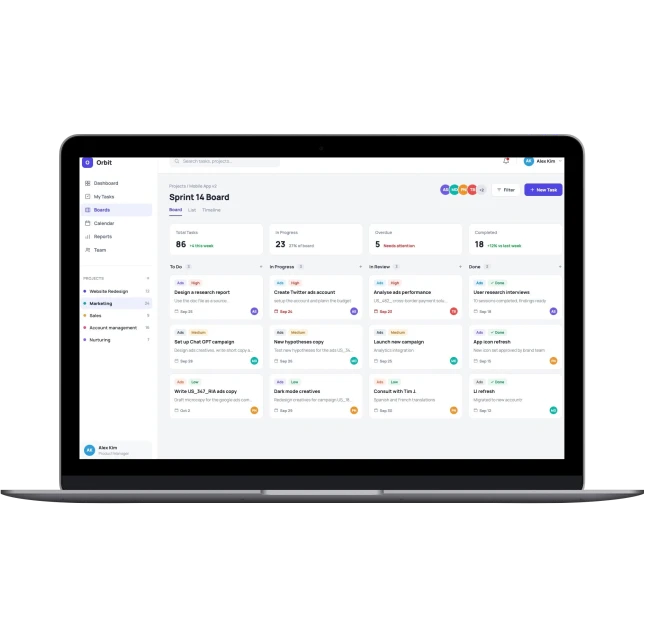
A Western Europe startup unified Google Chat, Gmail, and meetings into one AI assistant, built by 2 engineers in 360 hours using an AI-first harness workflow.
AI agents moved past search and recommendation this week and reached the points where money actually moves or gets committed. Shopify opened its full merchant base to Meta's Muse agent for checkout through Shop Pay, while Amazon blocked the same agent. Sela raised $21 million for voice agents that now help originate more than $1 billion in mortgages a month. Savvy turned the custody workflow behind its RIA into a product for outside advisors. And Citi launched a commerce media platform that sells access to its cardholders' transaction data. Each move puts an agent or a data layer at a point of authorization, origination, or record, where a mistake costs money or creates an obligation.
Shopify Opens Its Merchant Base to Meta's Muse Agent While Amazon Blocks It
Shopify partnered with Meta to let Muse, Meta's new personal AI agent, complete purchases across Shopify's entire merchant base through Shop Pay's agentic checkout. Merchants are discoverable in Muse by default through Shopify Catalog, and agent-driven orders carry the same economics and payment-processing rates as ordinary Shop Pay transactions. Shopify routes the flow through a universal commerce protocol that guides AI shopping and checkout. In contrast, Amazon blocked Muse from its site the day before, calling it an unauthorized AI agent and citing risks around customer data and credentials. Shopify shares rose sharply on the news.
Source: WSJ, September 2026
Why It Matters
Two of the largest commerce platforms gave opposite answers to the same question in the same week, and the split defines the strategic choice facing anyone who owns a checkout. Shopify treats the AI agent as a new distribution channel and makes its catalog agent-readable by default; Amazon treats it as an intermediary that inserts itself between the store and the customer relationship. The decision turns on whether an agent expands your reach or captures the customer you would rather own.
The enabling piece is structured product data plus a checkout that can accept an agent-initiated order. Muse transacts on the catalog data a merchant supplies, so title, price, options, and availability have to be accurate and machine-readable, since the agent acts on that feed rather than a human reading the page. Opening checkout to agents by default also means a merchant's product data now flows to a third-party platform automatically, which is a data-sharing decision, not just an integration.
What Teams Should Do
This applies to e-commerce platforms, merchants, PSPs, and any product deciding whether to expose checkout to third-party AI agents.
- Decide deliberately whether agent traffic is a distribution channel or a threat to your customer relationship, since defaulting either way has strategic consequences.
- Structure your product catalog as accurate, machine-readable data (price, options, availability), because an agent transacts on the feed, not the page a human sees.
- Confirm what customer and product data flows to the agent platform when you enable agentic checkout, and treat that as a data-sharing decision with a review.
- Verify agent-initiated orders carry a real authorization from the buyer, so a purchase no human clicked through can be traced and disputed cleanly.
- Instrument conversion and returns for agent-driven orders separately, since their behavior and dispute patterns differ from human checkout.
Sela Raises $21M for Voice AI Agents That Help Originate Over $1B in Mortgages a Month
Sela, a San Francisco startup founded in 2024, raised $21 million across Seed and Series A rounds led by Costanoa Ventures with Emergence Capital participating. Its voice AI agents handle borrower interactions in the mortgage sales process, answering questions and connecting borrowers to human loan officers, and the company says agents now help originate more than $1 billion in loans monthly. Six of the ten largest independent mortgage banks use Sela in production. In one A/B test of more than 10,000 borrowers, Sela reported a 9% increase in lead-to-lock rates. The company cites roughly $10 million in annualized revenue within 18 months.
Source: Axios, September 2026
Why It Matters
Voice AI is moving from support deflection into the revenue-generating, regulated front end of lending. A mortgage sales conversation is subject to fair-lending rules, disclosure requirements, and recordkeeping, so an agent working that conversation is operating inside a compliance perimeter, not a help desk. Its scripts, disclosures, and handoffs to a licensed officer become part of the regulated workflow that examiners can review.
The economic pull is strong enough that the compliance work will lag the adoption unless teams force it. Lenders are buying on conversion and cost per funded loan, both under pressure in a high-rate market, which incentivizes putting agents in front of borrowers fast. That makes the discipline explicit: every agent-borrower interaction needs a recorded transcript, consistent disclosures, and a defined point where a licensed human takes over, because a voice agent that quotes a rate or implies an approval creates lender liability.
What Teams Should Do
This applies to mortgage lenders, consumer lenders, and any product putting AI voice or chat agents into a regulated sales or origination flow.
- Record and retain every agent-borrower interaction as a reviewable transcript, since origination conversations fall under recordkeeping and fair-lending scrutiny.
- Constrain what the agent can state about rates, terms, and approvals, so it cannot imply a commitment the lender has not made.
- Define the exact handoff point where a licensed loan officer takes over, and enforce it in the workflow rather than leaving it to the agent's judgment.
- Test the agent for consistent treatment across borrower groups, since inconsistent scripts or offers create fair-lending exposure.
- Measure conversion against a human baseline with A/B tests, so the lift is proven on your book before you expand the agent's scope.
Savvy Wealth Turns Its Custody Workflow Into a Platform for Outside RIAs
Savvy Wealth, an AI-native RIA managing about $9 billion, launched the Savvy Custodial Platform, a technology and services layer that lets independent RIAs onboard clients in as little as 90 seconds and move assets with minimal paperwork. Savvy is not itself a custodian: its broker-dealer acts as introducing broker, and Fidelity's National Financial Services handles clearing, execution, and custody. The platform, used internally by Savvy's 150-plus advisors for months, is white-labeled and bundles CRM, billing, trading, and reporting. Outside RIAs can join a waitlist, with onboarding expected in early-to-mid 2027 and external pricing not yet set.
Source: WealthManagement.com, September 2026
Why It Matters
A firm built its internal operating stack, then turned it into a product for competitors, following a pattern where the tooling a company builds to run itself becomes a revenue line. Savvy is layering a modern software experience on top of an incumbent custodian's clearing and custody rather than replacing it, which lets it compete on onboarding speed and workflow without holding assets or taking on custodial capital requirements. The differentiator is the layer between the advisor and the custodian, not the custody itself.
That introducing-broker structure carries a specific dependency. Client assets and the regulated custody function sit with Fidelity's NFS, so Savvy's platform is only as reliable as that integration, and a break between the software layer and the custodian surfaces as a stalled transfer or a reporting mismatch in a live client account. An RIA adopting a white-labeled platform also has to know where its data lives and what happens to client records if it later leaves the platform.
What Teams Should Do
This applies to wealthtech platforms, RIAs evaluating custody options, and any product layering software over an incumbent infrastructure provider.
- Map exactly which functions the platform provides versus the underlying custodian, so incident ownership and regulatory responsibility are clear before you commit.
- Reconcile positions, transfers, and cash between the software layer and the custodian, since a sync gap becomes a client-visible error, not a backend glitch.
- Establish your data-exit terms before adopting a white-labeled platform, so client records and history are portable if you switch providers later.
- Test the onboarding and asset-transfer flow against edge cases (partial transfers, account types, failed ACATs) before moving client accounts onto it.
- Weigh the switching cost of a bundled CRM, billing, trading, and reporting stack, since deep integration is convenient but raises the cost of leaving.
Citi Launches a Commerce Media Platform Built on Cardholder Transaction Data
Citi's US Consumer Cards business launched Citi Commerce Media, a platform that connects brands with the bank's US credit card customers across Citi.com, the Citi Mobile App, and paid media, using insights from about 70 million customers and 6.5 billion annual transactions. It combines first-party transaction data, paid media, and closed-loop measurement, and Citi cited early campaigns reaching up to 5x incremental return on ad spend for one retailer. The platform's capabilities will expand once Citi's pending acquisition of Kard, a commerce media and rewards platform announced in August, closes.
Source: PYMNTS, September 2026
Why It Matters
A bank is turning its transaction data into an advertising business, converting a byproduct of card processing into a revenue line with margins closer to media than lending. Because Citi can verify that a purchase happened, it offers advertisers closed-loop measurement that browsing-based ad platforms cannot match, which makes verified spend data the product. Launching the platform before the Kard acquisition closes signals that Citi is moving on the opportunity with the data it already holds.
The obligation that comes with it is governance of that data. Using cardholder transaction behavior to target ads raises questions of consent scope, purpose limitation, and what customers agreed to when they opened a card, and the answers become architecture: which data can feed targeting, how opt-outs are enforced, and how the advertising system is walled off from core banking. For any institution sitting on transaction data, the durable asset is a permissioned data layer with clear provenance, since the same data that powers a media business becomes a liability if its consent basis is unclear.
What Teams Should Do
This applies to card issuers, banks, neobanks, and any product considering monetizing transaction data through advertising or offers.
- Define the consent basis for using transaction data in ad targeting, and confirm it covers the use before building a media product on top of it.
- Enforce opt-outs across every downstream use, so a customer's choice propagates to the targeting system, not just the marketing preference screen.
- Wall off the advertising data layer from core banking systems, so ad targeting cannot reach data or decisions it should not touch.
- Track provenance for each data element used in targeting, since a media business invites scrutiny of where the behavioral data came from.
- Treat the media platform as a new revenue line with its own risk profile, not a marketing feature, and staff its governance accordingly.
Closing Insight
Look at every place an AI agent or an external data layer now touches money, a commitment, or a customer record in your product: the checkout, the origination call, the asset transfer, the transaction feed. For each one, ask what proves the action was authorized, what record survives it, and where a human or a control stands between the agent and an irreversible outcome. This week put agents and data layers on exactly those boundaries, and the boundary, not the agent, is where the product risk now lives.
The capability that separates a durable product from a fragile one is control at the point of action: verifiable authorization for an agent-initiated purchase, a reviewable transcript for a regulated conversation, clean reconciliation between a software layer and the system of record, and a permissioned data layer with enforceable consent. In our work with fintech teams at Itexus, these boundary controls are usually what decide whether an agent can be trusted on the money-moving path or has to stay one step back from it. As agents reach further into the transaction, the products that hold up are the ones that can account for what happened at the edge.