
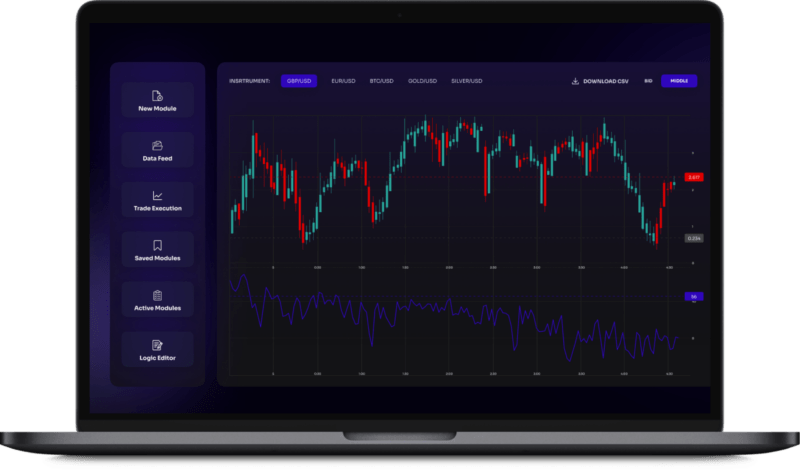
An automated, real-time trading system that allows administrators to configure trading strategies based on various technical indicators, and investors to invest their money in a selected strategy.
In today’s fast-moving world of finance, trading apps have become indispensable tools for investors. Whether you’re a newcomer learning the ropes or a seasoned trader executing rapid trades, the convenience of trading apps like Robinhood and eToro is undeniable. These platforms are not only popular; they’ve set the bar for what users expect in terms of accessibility, speed, and design.
If you’re thinking about developing a trading app for your business, you’re probably wondering: How much does it cost? Well, the short answer is—it depends. But don’t worry, we’ll break it down for you in a way that makes sense, highlighting key cost factors and introducing you to the top companies that can help turn your vision into reality.
The Cost of Developing a Trading App: What Really Affects the Price?
Developing a trading app is not as simple as building a regular app. There are several factors that influence the cost, from basic features to high-end security requirements. Let’s break them down:
1. App Features: Basic vs. Advanced
| App Type | Estimated Cost | Key Features |
|---|---|---|
| Basic Trading App | $40,000 – $80,000 | Simple stock trading, basic portfolio management, user login |
| Advanced App | $100,000 – $250,000 | Real-time data, AI insights, multi-currency support, crypto |
| Custom/Enterprise | $250,000+ | Blockchain, algorithmic trading, advanced analytics |
The more sophisticated the app, the more it will cost. Simple apps might only allow users to trade stocks, but as you add complex features like real-time market data, AI-driven trading algorithms, and cryptocurrency trading, development costs will increase.
2. Design and User Experience (UI/UX)
Trading apps need to be user-friendly—after all, users expect a smooth, intuitive experience when dealing with their money. The better your design, the more your app stands out from competitors.
- Basic design: clean, functional, with a straightforward user interface: $20,000 – $50,000.
- Advanced design: custom animations, personalized dashboards, seamless user navigation: $50,000+.
3. Security Features
When financial transactions are involved, security is non-negotiable. You’ll need to invest in top-notch security measures such as biometric logins, two-factor authentication (2FA), and encryption. Security is not only about protecting user data but also complying with regulations like KYC (Know Your Customer) and AML (Anti-Money Laundering).
- Security cost estimate: $10,000 – $30,000 depending on the level of encryption and additional features like biometric authentication.
4. Development Team Location
The location of your development team significantly affects the overall budget. Here’s a breakdown:
| Region | Hourly Rate |
|---|---|
| North America/Western Europe | $100 – $250 per hour |
| Eastern Europe/Asia | $25 – $50 per hour |
If you’re looking for cost-effective development without compromising quality, hiring a team from regions like Eastern Europe or Asia can offer great value.
Key Features to Include in a Successful Trading App
A successful trading app isn’t just about functionality—it’s about providing a smooth, engaging experience that keeps users coming back. Here’s a breakdown of some essential features you should include:
| Feature | Description | Why It Matters |
|---|---|---|
| User Onboarding & Authentication | Simple sign-up, two-factor authentication (2FA), and KYC compliance for secure user onboarding | Ensures a smooth start and builds user trust |
| Real-Time Market Data | Live updates for stock prices, forex, and crypto values | Users need accurate data to make informed decisions |
| In-App Notifications | Alerts for price changes, news updates, and executed trades | Keeps users engaged and informed |
| Portfolio Management | Tools to track assets, investments, and profit/loss summaries | Helps users manage their investments effectively |
| AI-Powered Recommendations | Personalized trading insights based on market trends | Enhances user experience with actionable insights |
| Social Trading | Copy-trading, social feeds, and community interaction | Enables beginners to learn from experts |
| Advanced Security | Biometric logins, encryption, and real-time fraud detection | Builds trust and ensures data safety |
Hidden Costs You Need to Consider
While the primary development costs are usually the main focus, there are other factors that can sneak up on you and inflate the price:
1. API Integration for Real-Time Data
Access to real-time stock, forex, or crypto data is a must for trading apps, but it requires integrating market APIs. This could add another $10,000 to $30,000 to your project’s budget.
2. Ongoing Maintenance
Once your app is live, it doesn’t mean your spending stops. Regular updates, security patches, and new feature rollouts are crucial to staying competitive. Plan to spend about 15-25% of your initial development cost on annual maintenance.
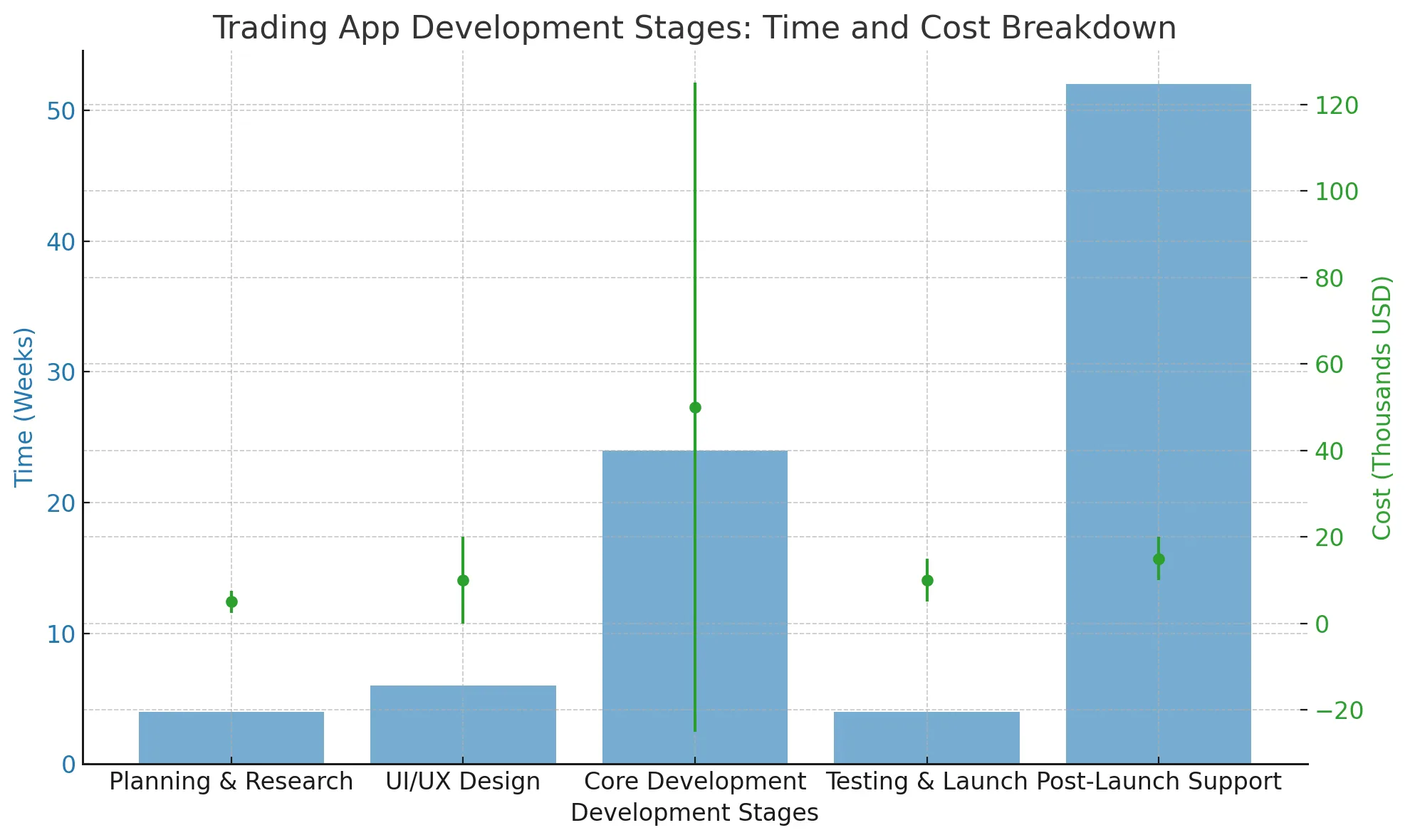
Breakdown of Trading App Development Stages
Developing a trading app requires careful planning. Here’s what the typical development process looks like:
Stage 1: Planning and Research
- Market Research: Analyzing competitors and defining your app’s unique value.
- Requirement Analysis: Identifying essential features and creating a roadmap.
Time: 2-4 weeks | Cost: $5,000 – $10,000
Stage 2: UI/UX Design
- Wireframing: Creating visual layouts of the app’s structure.
- Prototype Development: Building a clickable prototype to test user interactions.
Time: 3-6 weeks | Cost: $10,000 – $30,000
Stage 3: Core Development
- Front-End Development: Building the user interface.
- Back-End Development: Integrating APIs, databases, and payment gateways.
Time: 3-6 months | Cost: $50,000 – $200,000
Stage 4: Testing and Launch
- Quality Assurance: Ensuring the app is bug-free and secure.
- Beta Testing: Releasing to a small group for feedback.
Time: 2-4 weeks | Cost: $10,000 – $20,000
Stage 5: Post-Launch Support
- Maintenance: Regular updates, adding new features, and fixing bugs.
Time: Ongoing | Cost: 15-25% of initial cost per year
Top 5 Companies Specializing in Trading App Development
When it comes to developing a trading app, you’ll want to work with experts who understand both finance and technology. Here’s a list of the top 5 companies that can bring your trading app to life.
1. Itexus

Itexus is a leading name in the FinTech app development space, known for its customized trading platforms that cater to both stock and crypto markets. Whether you need a basic trading app or a complex, AI-powered solution, Itexus has the expertise to deliver.
| Key Strengths | Why Choose Them? |
|---|---|
| AI-powered and blockchain apps | Full-cycle development, strong focus on compliance |
| Custom trading platforms | Tailored solutions for startups and financial institutions |
2. SoluLab
Specializing in blockchain and cryptocurrency trading apps, SoluLab is perfect for those looking to dive into the world of crypto. They also offer advanced features like AI-driven trade algorithms.
| Key Strengths | Why Choose Them? |
|---|---|
| Blockchain expertise | Focus on cutting-edge technology and cryptocurrency trading |
| AI-powered trade algorithms | Sophisticated trading solutions with real-time data |
3. Fueled
Fueled is known for its award-winning UI/UX design. If you want an app that’s not only functional but also visually stunning, this is the team to go to. They specialize in user-friendly designs that make trading a seamless experience.
| Key Strengths | Why Choose Them? |
|---|---|
| Beautiful design | Focus on smooth, intuitive user experience |
| Cross-platform solutions | Expertise in both stock and crypto trading apps |
4. Ciklum
If scalability is your priority, Ciklum offers cloud-based infrastructures for trading apps. They specialize in real-time transaction capabilities and creating apps that grow as your user base expands.
| Key Strengths | Why Choose Them? |
|---|---|
| Cloud-based infrastructure | Scalable, high-performance apps with AI integration |
| Real-time data and transactions | Strong focus on reliability and high-level security |
5. Intellectsoft
Intellectsoft is ideal for businesses needing enterprise-level trading apps. They provide tailored solutions for financial institutions, focusing on blockchain integration and high-security features for large-scale platforms.
| Key Strengths | Why Choose Them? |
|---|---|
| Enterprise-grade solutions | Robust, secure, and scalable trading platforms |
| Blockchain and AI integration | Perfect for large financial institutions |
Final Thoughts: How Much Should You Budget?
The cost of developing a trading app can vary from $40,000 for a basic version to over $300,000 for a custom, feature-rich app. While it’s tempting to go for the cheaper options, remember that cutting corners—especially when it comes to security or user experience—can harm your app in the long run.
In summary, here’s a breakdown of where your money will go:
| Cost Factor | Price Range |
|---|---|
| App Features (basic to advanced) | $40,000 – $250,000+ |
| UI/UX Design | $20,000 – $50,000+ |
| Security and Compliance | $10,000 – $30,000 |
| Real-Time Market Data APIs | $10,000 – $30,000 |
| Development Team Location | $25 – $250 per hour |
| Ongoing Maintenance | 15-25% of initial cost annually |
Conclusion: Making Your Trading App Stand Out
The cost of developing a trading app can range from $40,000 for a basic platform to over $300,000 for a high-end custom solution. While the investment is substantial, the reward of creating a successful trading app is enormous. With the right features, user experience, and security, your app can attract thousands of users and generate significant revenue.
Partnering with the right development company—like Itexus, SoluLab, or Fueled—ensures that your app is built using the latest technology and market insights, putting you ahead in the competitive world of FinTech.
Are you ready to make your mark in the trading app world? Now’s the time!